
Direct Answer
What is a robot joint end-of-line test?
A robot joint end-of-line test is the production release process for each identified joint module or integrated actuator. The station confirms identity and configuration, runs an approved short sequence, verifies that the run is valid, applies version-controlled decision rules, stores unit-level evidence, and routes the unit to pass, fail, invalid, retest, quarantine, rework, or another controlled state.
EOL is not a compressed claim that every unit has completed the full R&D performance, thermal, endurance, and life-validation program. Every selected check should connect a manufacturing risk to an observable signal, a repeatable station method, an approved rule, and a production disposition.
Release Decision
Start with the production risk and the decision—not a universal test list.
| Release element | What the project should define |
|---|---|
| DUT and release point | Complete robot joint module or integrated actuator, included motor/reducer/encoder/drive/brake/firmware, revision, and whether the decision releases the unit to the next process, packing, or shipment |
| Manufacturing risk | The assembly, wiring, sensor, communication, lubrication, fastening, calibration, configuration, or handling defect that the station is expected to detect |
| Observable signal | The measured or verified value, state, response, communication, image, sound, vibration, temperature, current, torque, speed, or position that can expose the risk within the available cycle |
| Decision rule | Versioned limit, logic, valid-run condition, comparison method, units, direction, operating point, uncertainty or guard-band input, and approval owner |
| Disposition | Pass, fail, invalid, retest, quarantine, rework, scrap, engineering review, or controlled override path, including who may release the unit |
Unit and Recipe Control
Bind the result to the unit, product revision, station, and active versions.
A pass/fail value without the complete identity and version context cannot show which joint, fixture, sequence, software, limit, and production state produced the decision.
| Identity group | Minimum useful context |
|---|---|
| Unit identity | Serial number or approved unique identifier linked to model, variant, order or lot, and physical label or data-carrier status |
| Product definition | BOM, drawing, hardware, reducer, encoder, brake, motor, drive, cable, lubricant, assembly, and firmware or parameter-set revisions included in the tested unit |
| Station configuration | Station, fixture, adapter, instruments, calibration or verification status, recipe, sequence, limits, software, calculation, and report-template versions |
| Production context | Timestamp, shift, operator or automation identity, upstream process or line, environmental or utility state where required, and changeover status |
| Result linkage | Step results, raw or retained evidence reference, overall state, defects, invalid reason, retest relationship, rework disposition, and MES/database acknowledgement |
Every-Unit Test Stack
Select the shortest defensible sequence for the approved release risks.
Presence and identity
Confirm the unit, model, label, connectors, required components, recipe selection, and revision match before energizing or loading.
Communication and feedback
Verify the approved interface, device identity, encoder or sensor states, alarms, firmware or parameter set, and communication quality needed for the release decision.
Electrical and no-load behavior
Use declared supply, current, direction, speed, position, brake, idle or no-load states to detect the named assembly or configuration risks.
Controlled motion or load
Apply only the torque-speed-position segment needed to evaluate the selected production risk; a complete R&D map usually does not belong in every-unit EOL.
Mechanical and acoustic checks
Select backlash, lost motion, stiffness, vibration, noise, runout, friction or other checks only when the short method, fixture, repeatability, and decision rule are approved.
Thermal or short run-in checks
Use a declared initial state, operating segment, sensor location, duration, stop rule, and interpretation. A short EOL run is not a thermal-equilibrium, endurance, or life result.
Final state and handoff
Confirm alarms, stored parameters, brake or safe state, data write, label/marking, routing, and downstream acknowledgement before the unit leaves the station.
Use the Robot Joint Backlash and Stiffness Test Guide, Torque-Speed and Efficiency Testing Guide, and Robot Joint Thermal and Endurance Test Guide to define engineering methods before deciding whether a shortened, repeatable production check is valid.
Complete Cycle Budget
Measure from load to confirmed handoff, including abnormal work.
Test execution time is only one part of production capacity. Define the start and end events, included product mix, staffing and automation, data interfaces, recovery assumptions, and sustained scenario before quoting one cycle value.
| Cycle segment | Time and work that belong in the definition |
|---|---|
| Identify and load | Scan or select identity, verify variant and recipe, load the unit, clamp the fixture, make mechanical/electrical/data connections, and confirm presence |
| Initialize | Apply utilities, establish communication, read configuration, zero or reference channels, check interlocks, and determine whether the unit and station are ready |
| Execute | Run the approved functional, motion, load, measurement, comparison, or inspection steps with the declared timing and stabilization |
| Decide and record | Validate the run, calculate results, apply versioned logic, store unit-level data, receive database or MES acknowledgement, and present the disposition |
| Unload and hand off | Return to a safe state, disconnect and unclamp, mark or route the unit, clear the station, and confirm the next process received the correct state |
| Abnormal recovery | Include invalid runs, sensor or fixture faults, communication loss, safety stops, failed writes, manual review, retest, rework, and controlled restart |
| Changeover | Include fixture, cable, adapter, recipe, limit, reference-unit, verification, material and operator steps required when the approved product mix changes |
Decision State Machine
Keep product failures separate from invalid station conditions.
| State | Required interpretation and control |
|---|---|
| Pass | All required steps are valid and the approved release conditions are satisfied for the identified unit and active versions. |
| Fail | A valid test result violates an approved rule. Store the failed step, value, limit/version, defect code, and disposition. |
| Invalid | The station cannot make a product judgment because the run, fixture, channel, communication, safety state, identity, or data record is not valid. |
| Retest | A controlled repeat linked to the original record and permitted reason; it must not silently overwrite the first result or turn an invalid station condition into a product pass. |
| Quarantine or review | The unit is held for engineering or quality disposition when the result, configuration, reference, or process state needs investigation. |
| Rework and re-entry | Record the authorized action, new identity or revision context where applicable, and the rule for returning the unit to the correct test sequence. |
| Override or release | Limit access, require a named reason and approver, preserve the original outcome, and retain the final disposition and audit trail. |
Station Integration
Product variants may need different fixtures, interfaces, and station roles.
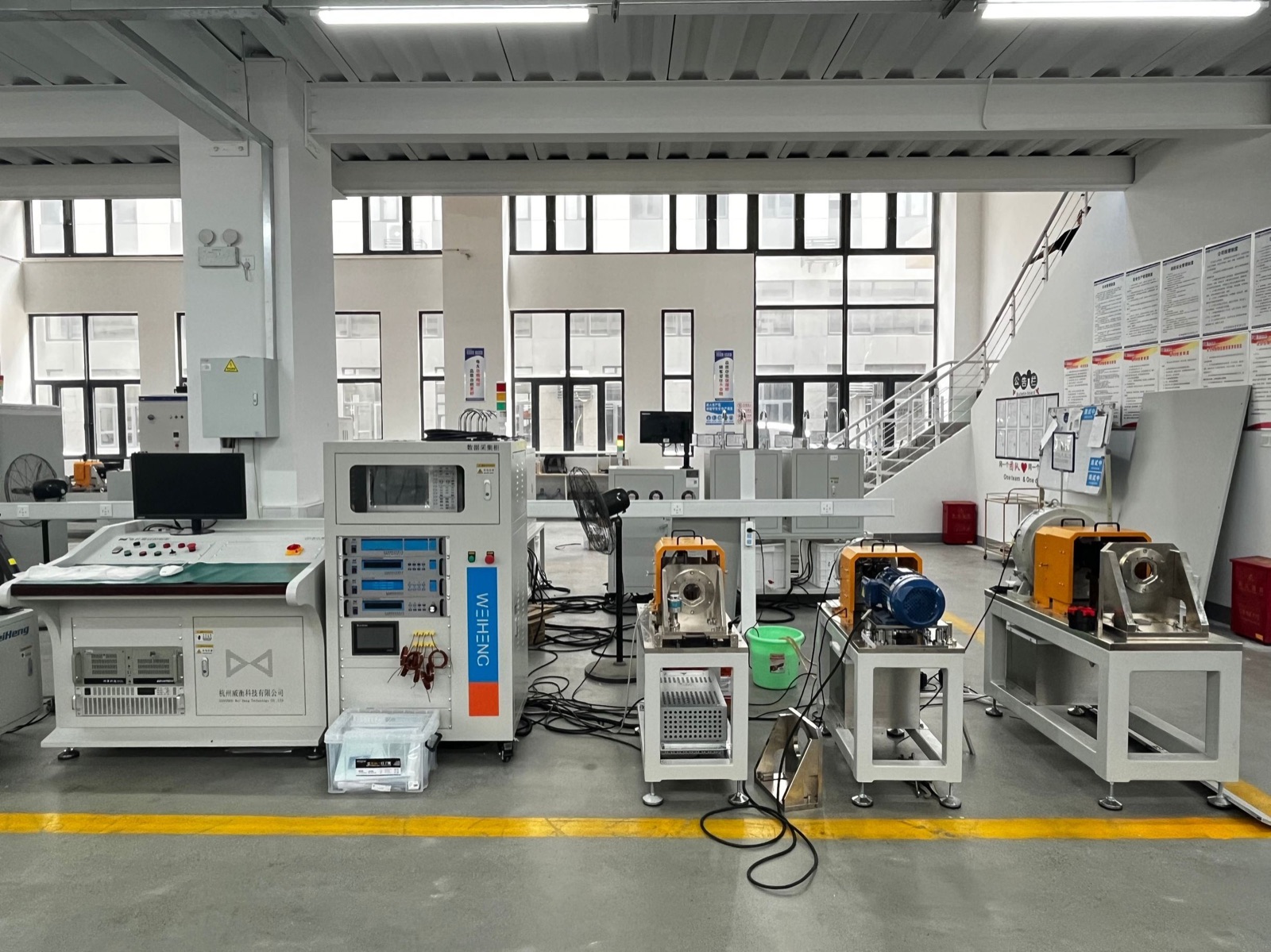
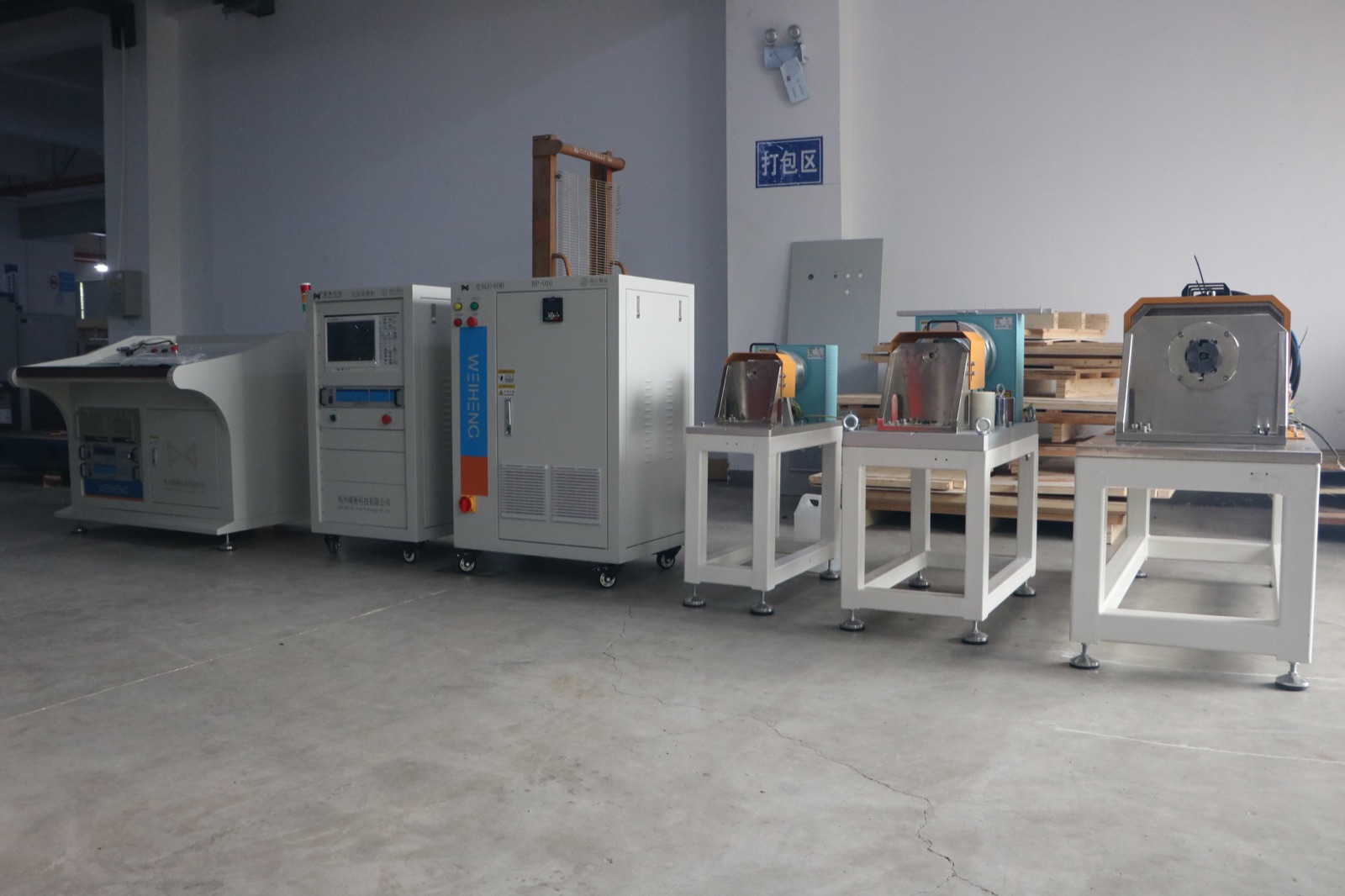
This Weiheng factory photo shows control and instrument equipment with several mechanical stations. It provides context for station-family planning, fixtures, utilities, controls, and changeover. Cycle time, yield, automation level, measurement performance, and production acceptance are confirmed for each project.
Use the Motor End-of-Line Test System page for the broader production-system route and the Robot Joint Module Motor Test System for the complete actuator platform.
Reference Unit and Measurement Control
Define what the reference checks and what happens when it fails.
| Control area | Required definition |
|---|---|
| Reference-unit purpose | Define whether the unit checks station function, fixture setup, channel response, decision logic, drift, or a known defect; one reference may not cover every risk. |
| Identity and custody | Control the reference-unit identifier, revision, approved condition, storage, handling, protection, maintenance, and change history. |
| Check interval | Set the event-based or time-based check points around startup, shift, changeover, maintenance, abnormal event, or project-defined interval. |
| Expected response | Use versioned expected values or states, tolerance and decision rules tied to the station configuration; do not substitute an undocumented 'golden sample'. |
| Failure response | Define stop, containment, last-known-good boundary, affected-unit review, correction, re-verification, and authorization before production resumes. |
| Measurement study | Approve the repeatability, reproducibility, discrimination, fixture, operator, variant and reference plan appropriate to the release decision; this page publishes no GR&R result. |
Traceability and MES
Retain enough context to reconstruct one unit's release path.
- Unit, model, variant, order or lot, BOM/drawing/hardware/firmware/parameter revisions, and physical label status
- Station, fixture, adapter, instruments, calibration or verification state, recipe, sequence, software, limit and calculation versions
- Step command, operating point, direction, duration, measured value, unit, decision rule, result, alarm, and raw-evidence reference where required
- Overall pass, fail, invalid, retest, quarantine, rework, override or release state plus defect, reason, approver, and relationship to prior records
- Timestamp, shift, operator or automation identity, line/process context, utilities or environment where required, and changeover state
- MES, database, label, marking, routing, downstream handoff and acknowledgement status, including failed writes and recovery
The OPC Foundation ISA-95 test-result model provides fields for result identity, description, date, result and unit; the GS1 Global Traceability Standard organizes traceability around identified objects and events. The final identifiers, interfaces, data retention, security and acknowledgement logic remain project-specific.
Weiheng Original Evidence Chain
Link one release decision from the approved requirement to final sign-off.
Hangzhou Weiheng Technology uses the Weiheng Robot Joint EOL Traceability and Release Evidence Chain v1.0 to keep each production release decision traceable from an approved requirement and risk through unit identity, active recipe, station configuration, synchronized evidence, versioned decision logic, exception history, database acknowledgement, and final sign-off. It defines a record structure; acceptance for a specific unit, station, or project still requires the referenced evidence and authorized sign-off.
- EOL-R01: Requirement and production risk
- EOL-R02: Unit and product identity
- EOL-R03: Station and recipe baseline
- EOL-R04: Valid execution evidence
- EOL-R05: Decision and validity
- EOL-R06: Exception and relationship
- EOL-R07: Data and handoff acknowledgement
- EOL-R08: Release and sign-off
How the stages connect: The RFQ records inputs and open items; the proposal and design record responses and deviations; FAT and SAT cover their agreed factory and site checks; commissioning establishes the operating baseline; and every-unit EOL applies the released recipe and decision logic to one identified unit. Each stage has its own scope and sign-off.
What the worksheet covers: This Weiheng-authored structure organizes review and traceability. Project values such as cycle time, capacity, accuracy, repeatability, GR&R, yield, lifetime, certification, and acceptance results must come from the applicable specification and signed project records.
FAT, SAT and Handover
Challenge the release gate before it controls production.
| Acceptance area | Evidence to define and retain |
|---|---|
| Requirement coverage | Map each release risk and test requirement to a station step, signal, method, rule, output record, exception path, and acceptance owner. |
| Known conditions | Challenge approved good, failed, boundary and invalid conditions without treating one demonstration as universal coverage. |
| Variants and changeover | Verify product identification, fixture and cable selection, recipe/limit version, reference checks, permissions, and error-proofing for the approved mix. |
| Cycle and capacity | Demonstrate the complete load-to-handoff cycle, abnormal recovery and sustained scenario using the agreed mix, staffing, interfaces and definitions; do not substitute test-only time. |
| Traceability | Query unit history, versions, raw or retained evidence, defects, retests, rework, overrides, data acknowledgements, reports and access records. |
| Interfaces and recovery | Challenge communication, utility, database/MES, label, sensor, fixture, safety and data-write failures plus controlled recovery. |
| Safety and operation | Verify interlocks, limits, guards, emergency behavior, safe states, permissions, diagnostics, maintenance access and operating instructions. |
| FAT, SAT and handover | Separate factory and site evidence, list open items, responsibilities, training, documentation, spare or maintenance needs, final sign-off and revision baseline. |
Before Quotation
Inputs that make a robot joint EOL proposal reviewable.
- Complete robot joint or actuator drawing, model and variants; included motor, reducer, encoder, brake, drive, firmware, cables and lubricant state
- Production stage, unit identity method, product mix, order or lot context, expected shifts/volume, changeover pattern, and load-to-handoff cycle definition
- Known manufacturing risks, release criteria, required test steps, valid-run rules, limits, guard-band or uncertainty inputs, and decision owner
- Mechanical fixture, adapters, connections, handling, loading, guarding, utilities, communication, sensor, drive and controller interfaces
- Required motion/load segments, torque, speed, position, current, voltage, temperature, vibration, noise or other channels and synchronized records
- Pass/fail/invalid/retest/quarantine/rework/override states, defect codes, permissions, reference-unit plan, station checks and measurement-study requirements
- Traceability, MES/database, label/marking, routing, reports, raw-data retention, cybersecurity or access needs, FAT/SAT, site conditions and target country
Use the Robot Joint Module Test Bench Configuration Guide when the main question is the complete engineering platform, or the R&D Test Bench vs EOL Test System guide when the team still needs to choose the workflow.
FAQ
Robot Joint End-of-Line Test Questions
What is robot joint end-of-line testing?
Robot joint end-of-line testing is the production release process for each identified joint module or integrated actuator. It runs an approved sequence, validates the run, applies version-controlled decision rules, stores unit-level evidence, and routes the unit as pass, fail, invalid, retest, quarantine, rework, or another approved state.
How is robot joint EOL different from R&D validation?
R&D validation explores behavior across wider operating regions, methods, configurations, thermal states, and endurance conditions. EOL selects only the checks needed to detect named production risks and release each unit within the complete factory workflow. An EOL pass is not a substitute for design validation.
Which tests should run on every robot joint module?
There is no universal every-unit list. Choose checks by manufacturing risk, detectable defect, release decision, available cycle, fixture and measurement capability, repeatability, false-accept and false-reject consequences, and approved quality plan.
Should an invalid robot joint test be recorded as a fail?
No. A fail is a valid product result outside an approved rule. Invalid means the station could not make a defensible product judgment because the run, fixture, identity, channel, communication, safety state, or record was not valid. The two states need different recovery and containment paths.
What should a robot joint EOL traceability record include?
Link the unit and product revisions to station, fixture, recipe, software, limits, operator or automation identity, timestamp, step results, values and units, overall state, defects, invalid runs, retests, rework, overrides, routing, and MES or database acknowledgement.
What information is needed for a robot joint EOL proposal?
Send the complete joint definition and variants, production risks, release sequence, complete cycle definition, fixtures and interfaces, measurement and limit rules, decision states, reference-unit and verification plan, traceability/MES needs, FAT/SAT scope, factory conditions, and target country.