
Direct Answer
How do you select motor testing equipment?
Select motor testing equipment by defining the decision, DUT boundary, complete operating sequence, loading and energy path, measurement channels, mechanics, automation, data, site interfaces, and verification plan. Issue the same revision-controlled input matrix to every supplier. Compare each response as comply, conditional, alternative, excluded, or open, with named evidence and ownership. Only compare price and schedule after the quoted scopes are technically aligned.
Ten Selection Inputs
Define one common baseline before requesting proposals.
| Input group | What the buyer should define | Why it changes equipment selection |
|---|---|---|
| 1. Decision and test stage | State whether the system supports R&D, characterization, validation, QC, EOL, troubleshooting, audit, or laboratory service. | The decision defines flexibility, automation, traceability, cycle, permissions, and acceptance evidence. |
| 2. DUT boundary | Identify the motor or assembly, included controller/inverter, feedback device, cooling, variants, drawings, and buyer- or supplier-provided items. | Suppliers must quote the same physical and functional boundary. |
| 3. Operating envelope | List rated and peak torque, speed and power plus the required torque-speed-time points, directions, quadrants, ramps, reversals, dwell, and repeats. | Headline maxima do not define the required loading and thermal duty. |
| 4. Required measurements | Name each electrical, mechanical, thermal, position, vibration, pressure, or flow channel and the decision it supports. | This separates necessary evidence from an instrument list assembled without a test question. |
| 5. Loading and energy path | Define absorb-only, motoring, regenerative, transient, inertia, control-mode, supply, braking, cooling, and utility requirements. | The operating states determine the loading architecture and where energy and heat go. |
| 6. Mechanical integration | Provide shaft, flange, orientation, alignment, coupling, runout, bearing-load, fixture, guarding, changeover, and service-access inputs. | Mechanical scope affects safety, repeatability, maintainability, and variant coverage. |
| 7. Control and automation | Define command and feedback ownership, sequence editing, alarms, interlocks, emergency stop, barcode, PLC, MES, and operator workflow. | A laboratory bench and a production station can share hardware but require different control behavior. |
| 8. Data and software | Specify raw channels, synchronization, calculations, curves, pass/fail rules, reports, user roles, version control, retention, export, and backup. | Comparable proposals must show how test evidence is produced and governed. |
| 9. Site and project interfaces | State voltage, utilities, cooling, floor and environment, target country, language, installation boundary, schedule dependencies, and buyer interfaces. | These inputs reveal excluded work and site-readiness risks before award. |
| 10. Verification and handover | Define design-review records, agreed checks, deliverables, calibration status, training, issue handling, change control, and sign-off responsibilities. | Acceptance must be tied to named evidence and contract scope rather than a generic completion statement. |
Response Discipline
Use five statuses so missing scope cannot look like compliance.
| Status | Minimum useful supplier response |
|---|---|
| Comply | The proposal identifies the offered configuration and points to a calculation, drawing, channel schedule, workflow, demonstration, or acceptance record. |
| Comply with condition | The response names the condition, dependency, limit, required buyer input, and effect on scope or schedule. |
| Alternative | The supplier explains the different architecture, why it answers the test decision, and which requirement or trade-off changes. |
| Excluded | The item is visibly outside the quoted scope, with ownership assigned to the buyer or another party. |
| Open | The missing input, responsible owner, target resolution point, and quotation assumption are recorded instead of guessed. |
Proposal Comparison
Normalize the offered scope before comparing price.
Use one row for each requirement or open decision. Keep technical response, evidence, exclusions, buyer responsibilities, commercial impact, and verification stage visible in the same comparison record.
| Comparison field | What to record |
|---|---|
| Requirement reference | A stable requirement ID and revision so responses remain traceable after clarification. |
| Supplier response | One of the five response statuses plus a concise technical explanation. |
| Offered scope | Named equipment, software, fixture, service, document, or buyer-supplied item. |
| Evidence | Calculation, envelope, drawing, channel list, sequence, sample export, report, risk review, or verification record. |
| Assumption or exclusion | The condition that limits the response and who must resolve it. |
| Commercial impact | Whether clarification changes price, lead dependency, option status, or buyer responsibility; exact terms remain proposal-specific. |
| Verification stage | The agreed review, demonstration, factory check, site check, or handover point for the item. |
Route the Requirement
Move from the selection matrix to the correct equipment route.
Use Motor Testing Equipment to compare complete equipment categories. Review the Motor Test Bench for an integrated engineering system, the Dynamometer Test Bench when controlled loading and performance mapping drive the architecture, and the Motor End-of-Line Test System for production fixtures, recipes, pass/fail, and traceability.
The motor test bench selection guide explains the engineering choice in depth. The RFQ checklist checks whether the first inquiry is complete. This page is specifically for normalizing and comparing supplier proposals.
Common Gaps
Six reasons apparently similar quotations are not comparable.
- Comparing total price before confirming that every supplier quoted the same DUT, test sequence, fixture, data, site, and handover boundary.
- Sending only rated power, maximum torque, and maximum speed without required simultaneous operating points or duration.
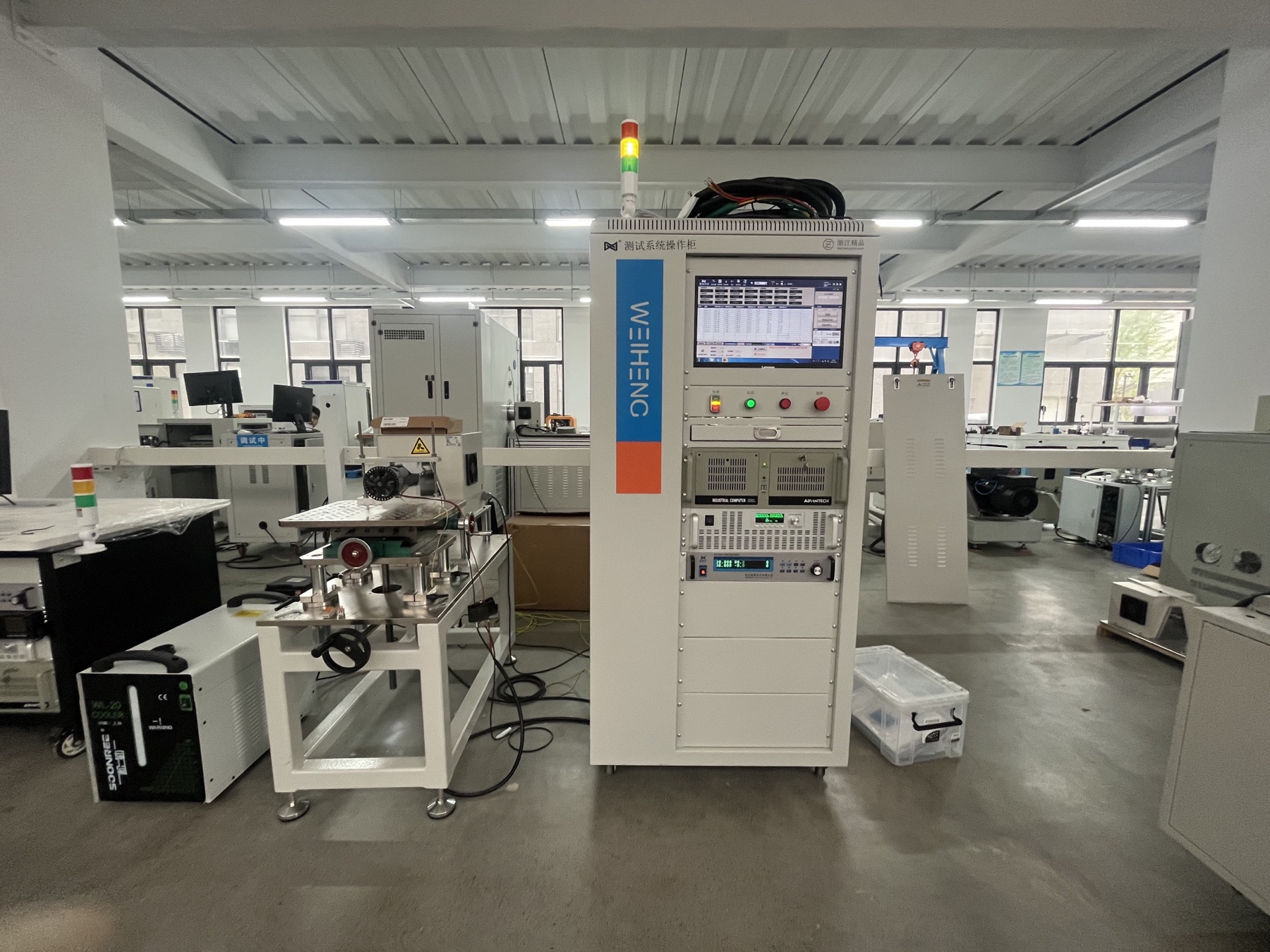
- Using an equipment photograph, component datasheet, logo, or generic certificate as proof of complete-system performance.
- Leaving software, raw-data access, report logic, user permissions, version control, and factory interfaces until after hardware selection.
- Treating a blank response as compliance instead of assigning an open item, assumption, exclusion, and owner.
- Mixing R&D flexibility and production throughput in one requirement without stating which workflow controls fixture, automation, traceability, and acceptance decisions.
FAQ
Motor Testing Equipment Selection Questions
How should motor testing equipment proposals be compared?
Compare proposals against one revision-controlled requirement matrix. Require each supplier to state compliance, conditions, alternatives, exclusions, open items, offered scope, evidence, assumptions, ownership, and verification stage. Do not compare price until the quoted system boundaries are aligned.
What information is needed before selecting motor testing equipment?
Define the test decision, DUT boundary, torque-speed-power-time envelope, measurements, loading and energy path, fixtures, controls, software and data, site interfaces, target country, and verification or handover plan.
Is the lowest quotation the best motor test equipment choice?
Not necessarily. A lower total may reflect excluded fixtures, sensors, cooling, software, safety, integration, documents, installation, or verification. Normalize scope and unresolved risk before comparing commercial terms.
Can suppliers propose alternative equipment architectures?
Yes. Record an alternative when it still answers the required test decision. The supplier should explain the changed architecture, evidence path, limitations, buyer impact, and requirement trade-offs.
Should open requirements be removed before requesting a quotation?
No. Important unknowns should remain visible with an owner, assumption, and resolution point. Silent blanks or guessed values make proposals look comparable when they are not.
Does a factory photograph prove equipment accuracy or acceptance?
No. A photograph can verify visible hardware and integration. Range, accuracy, repeatability, cycle time, compliance, and acceptance require project-specific definitions and records.