
Direct Answer
What is the difference between an R&D motor test bench and an EOL test system?
An R&D motor test bench is optimized to learn how a motor behaves: engineers vary procedures, operating points, instrumentation, and analysis. An EOL system is optimized to make a consistent production decision: it runs an approved sequence, applies controlled limits, records unit identity, and returns traceable pass/fail results within the required workflow. One platform can sometimes support both, but availability, change control, fixtures, and cycle-time risk must be evaluated separately.
Decision Matrix
R&D test bench vs EOL test system comparison.
| Decision area | R&D motor test bench | End-of-line test system |
|---|---|---|
| Primary decision | Understand performance, design limits, control behavior, or failure mechanisms | Confirm each unit meets defined production acceptance limits |
| Test scope | Broad and adjustable; may include maps, curves, thermal, transient, endurance, and exploratory sequences | Focused and repeatable; includes only the checks needed for shipment or the next process |
| Flexibility | High; engineers may change points, sequences, limits, channels, and sample configurations | Controlled; changes follow approved production recipes and permissions |
| Cycle time | Driven by engineering validity, stabilization, mapping density, or endurance duration | Driven by takt time, handling, fixture action, judgment, and line output |
| Fixture and handling | Often adjustable or modular for development samples and multiple configurations | Optimized for repeatable loading, connectors, operator ergonomics, and fast changeover |
| Automation | Automates complex procedures but normally keeps engineering control and manual analysis available | Automates identification, sequence, judgment, data storage, alarms, and operator prompts |
| Result logic | Curves, raw data, calculated results, comparisons, and engineering interpretation | Clear pass/fail result, defect code, traceability record, and production report |
| Data integration | Detailed measurement files, plots, metadata, and development reports | Serial number or barcode, recipe, limits, station result, and optional factory-system communication |
| Test population | Development samples, prototypes, variants, benchmarks, or selected validation units | Each production unit or the sampling plan defined by the buyer's quality process |
| Change control | Engineers need controlled freedom to revise procedures, channels, calculations, and software settings | Recipe, limit, user-rights, software, and fixture changes require approval and an auditable version record |
| Availability and maintenance | Bench occupancy can follow investigation, setup, calibration, and long-duration test needs | Availability, fault recovery, preventive maintenance, spare strategy, and line interruption risk affect production output |
| Acceptance method | Verify measurement channels, procedure execution, operating conditions, raw data, calculations, and engineering deliverables | Verify identification, sequence, interlocks, limits, judgment, retest/quarantine flow, traceability, interfaces, and target cycle |
Choose R&D
Choose an R&D motor test bench when the question is “why?”
- You need torque-speed curves, efficiency maps, thermal behavior, dynamic response, or endurance data
- Engineers must change operating points, sequences, limits, sensors, or controller settings
- The purpose is design validation, benchmarking, calibration, root-cause analysis, or laboratory research
- Test depth and measurement quality matter more than a short production cycle
See the custom motor test bench and the torque-speed and efficiency testing guide for the development workflow.
Choose EOL
Choose an EOL system when the question is “does this unit pass?”
- Every manufactured motor or assembly must pass a defined quality gate
- The station needs repeatable fixtures, operator prompts, safety interlocks, and short cycle time
- Automatic limits, pass/fail judgment, defect codes, barcode or serial traceability, and stored results are required
- The workflow must fit line volume, shift operation, changeover, maintenance, and factory interfaces
Review the motor end-of-line test system for production sequence, pass/fail, fixtures, and traceability.
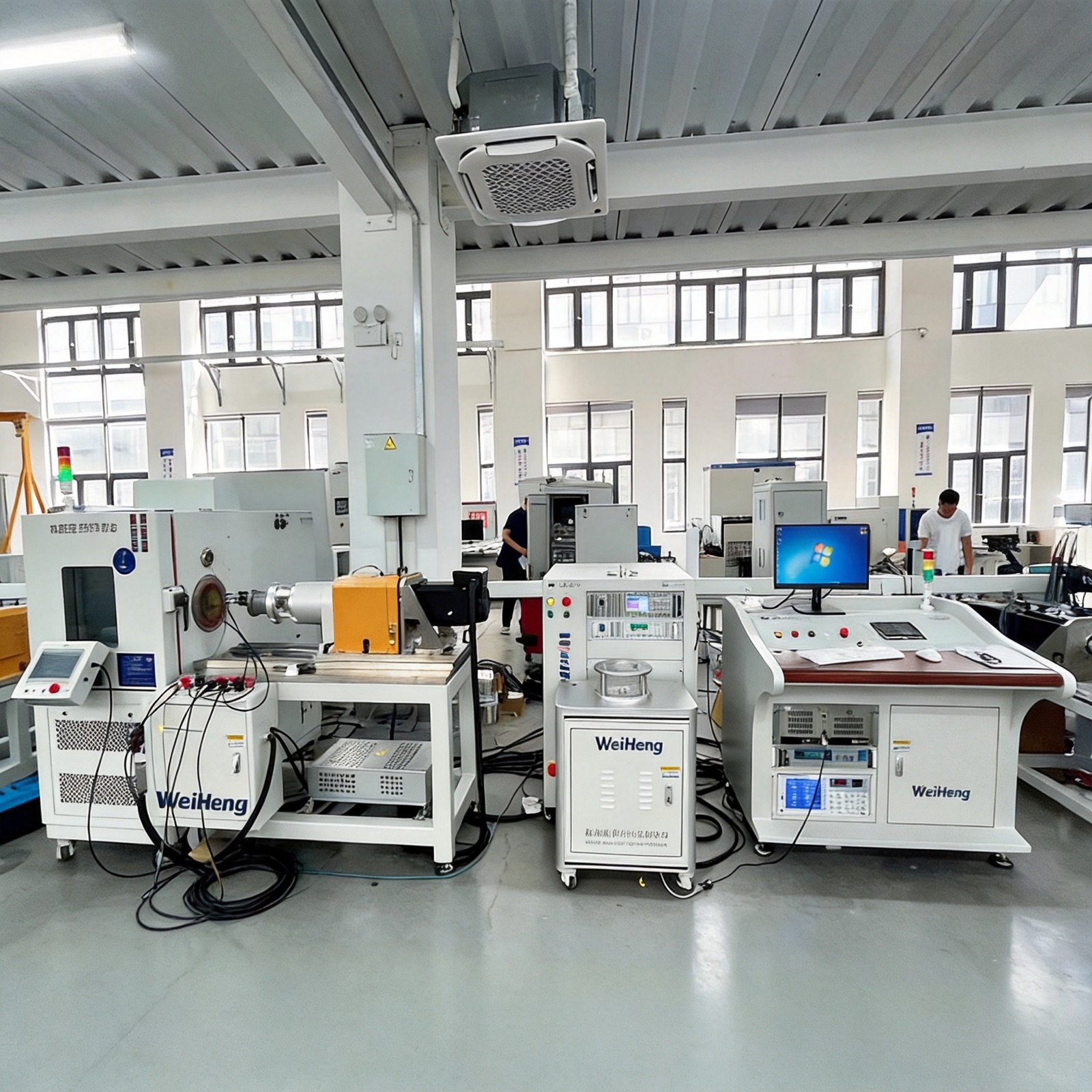
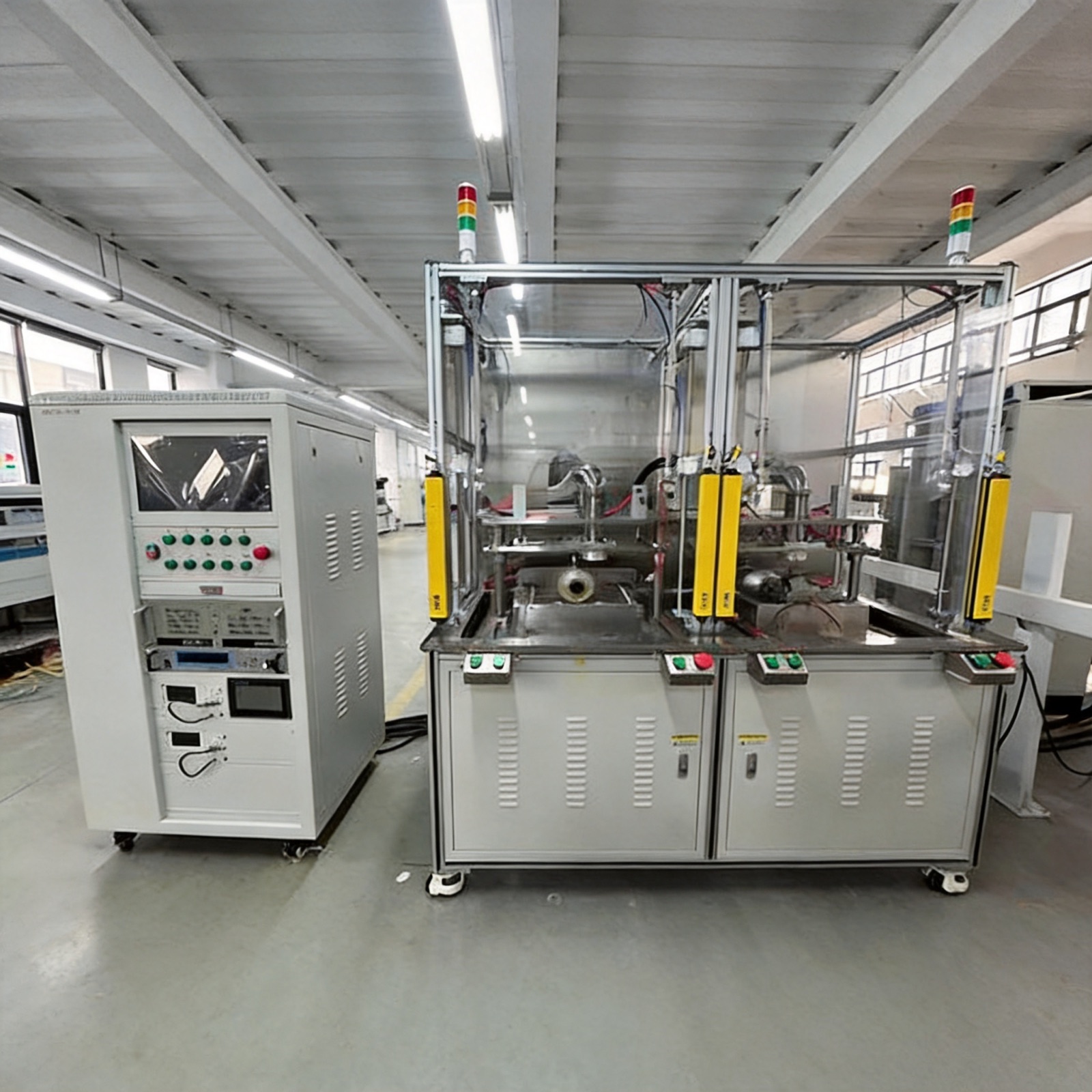
Real Systems
Different workflows create different equipment architecture.
Hybrid Decision Gate
When should one platform support both R&D and EOL?
Do not decide from shared torque-speed range alone. Record the following six conflicts before combining development and production work in one station.
| Decision area | Question to answer | Risk to control |
|---|---|---|
| Procedure stability | How often will test points, sensors, calculations, software, or acceptance limits change? | Frequent engineering changes can conflict with a controlled production recipe. |
| Capacity and availability | Can development occupancy, setup, calibration, endurance work, or fault investigation interrupt production? | A shared station needs an agreed capacity model and priority rule. |
| Fixture and handling | Can one mechanical interface safely support development variants and repeatable production loading or contacting? | Flexible fixtures may add cycle time; production fixtures may restrict engineering access. |
| Measurement and judgment | Do both workflows need the same channels, ranges, uncertainty, raw data, limits, and result logic? | Shared instruments do not make engineering analysis and production judgment identical. |
| Software governance | Can engineering access be separated from operator recipes, permissions, versioning, audit logs, and factory interfaces? | Uncontrolled changes can invalidate production decisions or development comparisons. |
| Failure and maintenance | What happens to production when the shared bench is recalibrated, modified, damaged, or unavailable? | The lowest purchase cost is not automatically the lowest operational risk. |
Before Quotation
Inputs that determine R&D, EOL, or a hybrid direction.
- Decision to be made: development characterization, validation, production quality, or shipment release
- Motor or assembly drawing, connector, controller, rated values, torque-speed envelope, and cooling
- Required test items, operating points, sequence, limits, stabilization, and acceptance procedure
- Expected sample count, cycle time, shift volume, station count, and product changeover frequency
- Fixture, loading, guarding, operator access, identification, and traceability requirements
- Data channels, report fields, pass/fail logic, barcode, PLC, MES, or other communication needs
A hybrid concept should be selected only after comparing engineering flexibility with production takt, availability, maintenance, change control, and acceptance risk. One combined station is not automatically the lowest-risk option.
Limits and Evidence Boundaries
What this comparison does not assume.
- R&D and EOL describe different decision workflows, not a universal list of test items. The final test scope depends on the motor, application, defect risks, internal procedure, target country, and acceptance agreement.
- An EOL station does not always require loaded dynamometer testing or 100% testing. The loading method and test population must follow the buyer's quality plan and the defects the station is intended to detect.
- A shared platform may be feasible, but common hardware does not remove conflicts in capacity, access rights, change control, fixtures, maintenance, traceability, or production availability.
- The equipment photographs confirm that Weiheng has built physical R&D-style and production-style test-system architectures. They do not prove a particular cycle time, accuracy, pass rate, customer result, or project acceptance.
FAQ
R&D and End-of-Line Test System Questions
What is the difference between an R&D test bench and an end-of-line test system?
An R&D test bench prioritizes test depth, flexible sequences, detailed measurement, and engineering analysis. An end-of-line system prioritizes repeatable production checks, short cycle time, automatic judgment, traceability, and operator workflow.
Can one motor test system be used for both R&D and EOL?
A shared platform can sometimes support both when the motor range, loading, fixtures, instruments, software, and safety requirements are compatible. However, development flexibility and production cycle-time needs should be reviewed separately before combining them.
Does an EOL system need a dynamometer?
Not always. The loading method depends on the defects and performance limits the station must detect. Some EOL sequences are no-load or application-specific, while others require controlled loading.
Why is an R&D test usually longer than an EOL test?
R&D may require stabilization, dense operating maps, repeated transients, thermal work, endurance, or exploratory measurements. EOL keeps only the checks needed to make a reliable production decision within the target cycle.
What information is needed before choosing R&D or EOL equipment?
Define the decision, motor and operating range, test list, limits, sample volume, cycle time, fixture, operator workflow, data, traceability, factory interfaces, site conditions, and target country.