R&D performance mapping
Use controlled loading and synchronized electrical and mechanical measurement for torque-speed curves, efficiency maps, thermal behavior, and design validation.
Review dynamometer test benches Request a Quote
 Custom Electric Motor Testing Systems
Weiheng designs and manufactures electric motor test benches for controlled loading, torque-speed, efficiency, temperature rise, endurance, and production quality testing.
Configure the loading method, measurement range, fixtures, software workflow, and test items around your motor and site.
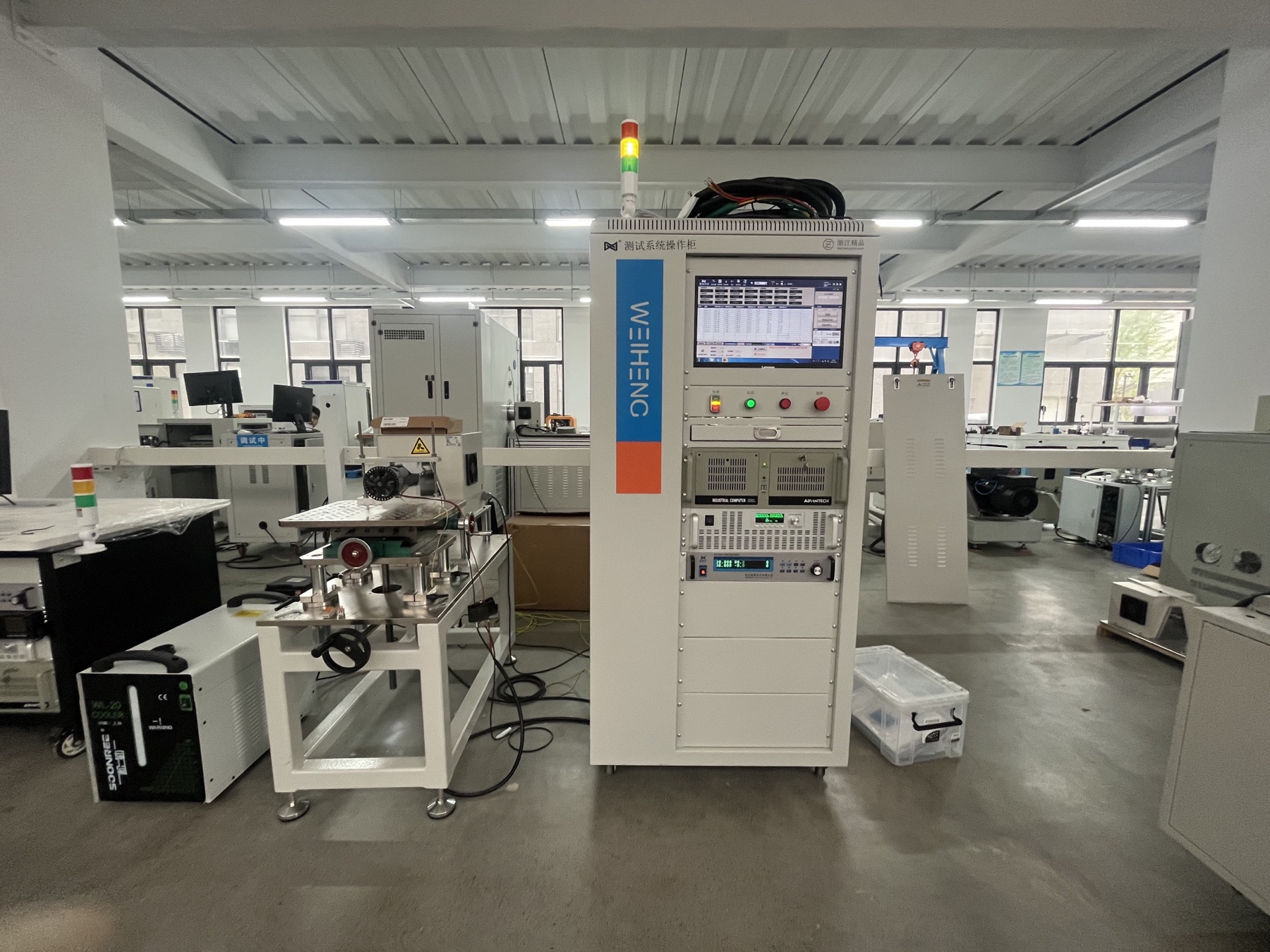
Direct Answer
Electric motor test benches are configured platforms used to measure and validate motor performance under controlled conditions, including torque-speed curves, efficiency, temperature rise, endurance, no-load, and production quality tests. Weiheng configures each system according to motor type, power, torque, speed, fixtures, software workflow, and laboratory or production environment.
Project Route
Start with the decision your team must make from the test data, then define the loading method, measurement boundary, fixture, workflow, and acceptance output.
Use controlled loading and synchronized electrical and mechanical measurement for torque-speed curves, efficiency maps, thermal behavior, and design validation.
Review dynamometer test benchesPlan repeatable sequences, limits, traceable records, fixtures, and cycle time around a production quality or final inspection station.
Review motor end-of-line testingMatch the loading unit, drive interface, fixture, synchronized channels, response sequence, and report workflow to the servo motor and engineering decision.
Review servo motor test systemsSeparate motor-only, motor-and-controller, and electric-drive-assembly scope before defining loading, cooling, electrical measurement, safety, and acceptance evidence.
Review EV motor testing routesCompare loading, measurement, fixtures, software, safety, and reporting before deciding whether the project needs a bench, instrument, or complete system.
Compare motor testing equipmentStart from operating points, duty cycle, cooling, mechanical interface, and the acceptance evidence required for pumps, fans, compressors, and other industrial drives.
Review industrial motor testingBuyer Selection Matrix
Use the required decision and acceptance evidence to select a project route before comparing rated power, headline ranges, price, or delivery time.
| Project objective | Evidence the bench must produce | Inputs to confirm first | Recommended route |
|---|---|---|---|
| R&D performance and design validation | Torque-speed curves, efficiency maps, thermal behavior, transient response, and repeatable engineering data | Operating envelope, duty cycle, quadrants, measurement uncertainty, controller and cooling interfaces | Dynamometer test bench |
| Durability and endurance validation | Repeatable long-duration loading, thermal monitoring, alarms, event records, and test interruption rules | Load profile over time, continuous and peak points, cooling, monitoring channels, stop conditions, and maintenance access | Industrial motor testing |
| Production quality control and EOL | Short-cycle automatic sequences, pass/fail limits, traceability, fixture changeover, and production records | Cycle time, motor variants, station count, barcode or MES interface, limit logic, records, and false-fail handling | Motor EOL test system |
| Servo or EV application validation | Application-specific loading, synchronized electrical and mechanical channels, control response, safety, and reports | Motor and controller boundary, voltage platform, speed and torque envelope, response sequence, cooling, safety, and acceptance method | EV motor testing |
When the route is still uncertain, start with the motor test bench selection guide and send the available motor data with unknown fields marked TBD.
Application Fit
Performance, efficiency, consistency checks, and automatic reports before delivery.
Validate motor design, control strategy, torque-speed characteristics, thermal performance, and durability.
End-of-line testing, pass/fail judgment, automatic data recording, and traceable reports.
Test EV, EPS, pump, compressor, seat, door, and other automotive component motors.
Build motor-control research, teaching, custom experimental, and third-party testing platforms.
Test Coverage
Final items are confirmed against the motor type, standard, application, and required software workflow.
System Architecture
Selected according to torque, speed, power, duration, dynamic response, and motor application.
Integrated sensors capture motor output performance and generate test curves.
Voltage, current, power, and efficiency data are synchronized with mechanical measurements.
Control cabinet, emergency stop, overload protection, grounding, and project-specific safeguards.
Custom fixtures and layouts for shaft structures, mounting positions, and production environments.
English interface, automated sequences, curve display, pass/fail logic, reports, and optional secondary development.
Proposal Inputs
A usable proposal starts with the motor envelope, required evidence, loading profile, and mechanical interface instead of a generic equipment list.
Motor type, rated and peak power or torque, rated speed, maximum speed, duty cycle, and controller or voltage platform.
The curve, map, temperature, endurance, pass/fail, or report result that the engineering or quality team must review.
Steady-state points, torque or speed sweeps, ramps, transients, direction changes, and the required repeatability conditions.
Motor drawing, shaft and mounting details, fixtures, safety guard, cooling, station layout, available utilities, and the delivery country.
Acceptance Review
A custom motor test bench is reviewable when the quoted configuration and the acceptance discussion use the same test article, sequence, measured output, and delivery boundary.
| Test article and fixture | Confirm the motor variant, shaft and mounting interface, coupling, guard, cooling connection, and any controller or harness supplied for the review. |
|---|---|
| Test sequence and limits | Define the no-load, load, sweep, thermal, endurance, or production sequence together with operating limits and any pass/fail logic. |
| Measured output | Agree the required torque, speed, electrical, temperature, curve, report, or traceability output before the software workflow is finalized. |
| Factory acceptance boundary | Record the supplied items, agreed test conditions, report format, review method, and any site-dependent items that cannot be confirmed before installation. |
For a field-by-field preparation list, use the motor test bench RFQ checklist. For loading-unit selection, review the motor dynamometer selection guide. To align channels, calculations, reports, and review boundaries, use the motor test data acceptance planning guide.
Engineering Options
| Motor type | AC, DC, BLDC, PMSM, servo, stepper, linear, and other custom motors |
|---|---|
| Power and torque | Configured according to rated, peak, and overload requirements |
| Speed range | Configured according to rated and maximum speed |
| Mechanical layout | Horizontal, rail-mounted, multi-station, 2D/3D structures, and custom fixtures |
| Test items | Efficiency, temperature rise, endurance, torque-speed curve, locked-rotor, no-load, and more |
| Software | English interface, automatic reports, custom workflow, and secondary development |
| Production needs | R&D bench, QC bench, EOL system, or multi-station production testing |
Technical Advantages
Measurement, loading, software, and mechanical integration are engineered as one working system.
Torque, speed, voltage, and current are collected on one synchronized platform.
Engineering-unit torque control creates repeatable conditions for motor validation.
Channel timing, synchronization, filtering, recording method, and output fields are configured around the test procedure.
Sensors, conditioning, acquisition, controls, mechanics, software, and calculations are reviewed as one measurement boundary.
Fixtures, stations, software, structure, reports, safety, and workflow can be configured around the project.
Configuration and RFQ Resources
Use the engineering guides below before sending motor data, drawings, and test requirements.
Understand how loading, measurement, fixtures, software, safety, and the project environment determine a custom motor test bench.
Open configuration guidePrepare the motor, test, mechanical, data, and delivery information that helps Weiheng return a more useful technical proposal.
Open RFQ checklistReview the torque-speed envelope, peak condition, duty cycle, cooling, and loading profile before selecting the dynamometer unit.
Open dynamometer selection guideSee how electrical, mechanical, thermal, and control channels work together for EV motor validation planning.
Open EV motor test items guideCompare the role of loading units, sensors, electrical measurement, acquisition, fixtures, software, and safety in a complete project.
Open equipment selection guideDefine raw channels, calculated results, timing, traceability, report fields, and review conditions before finalizing the system scope.
Open data acceptance guideDefine operating points, loading, fixtures, channels, workflow, and acceptance evidence for EPS, pump, fan, seat, door, wiper, compressor, and related motors.
Review automotive motor testingConnect motor input with flow, pressure, head, efficiency, temperature, liquid-circuit conditions, and operating-point acceptance.
Review pump performance testingBuilt by Weiheng
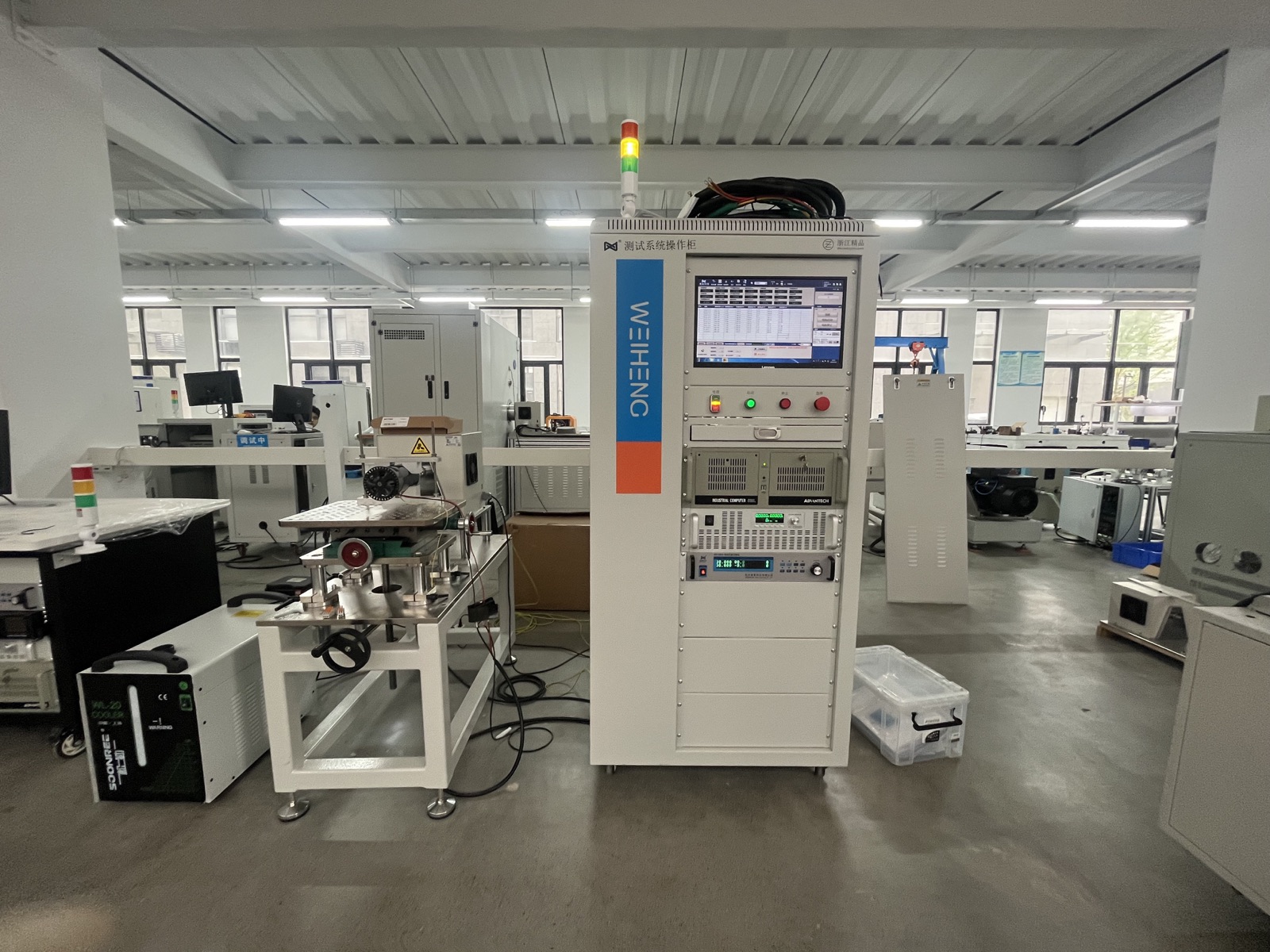
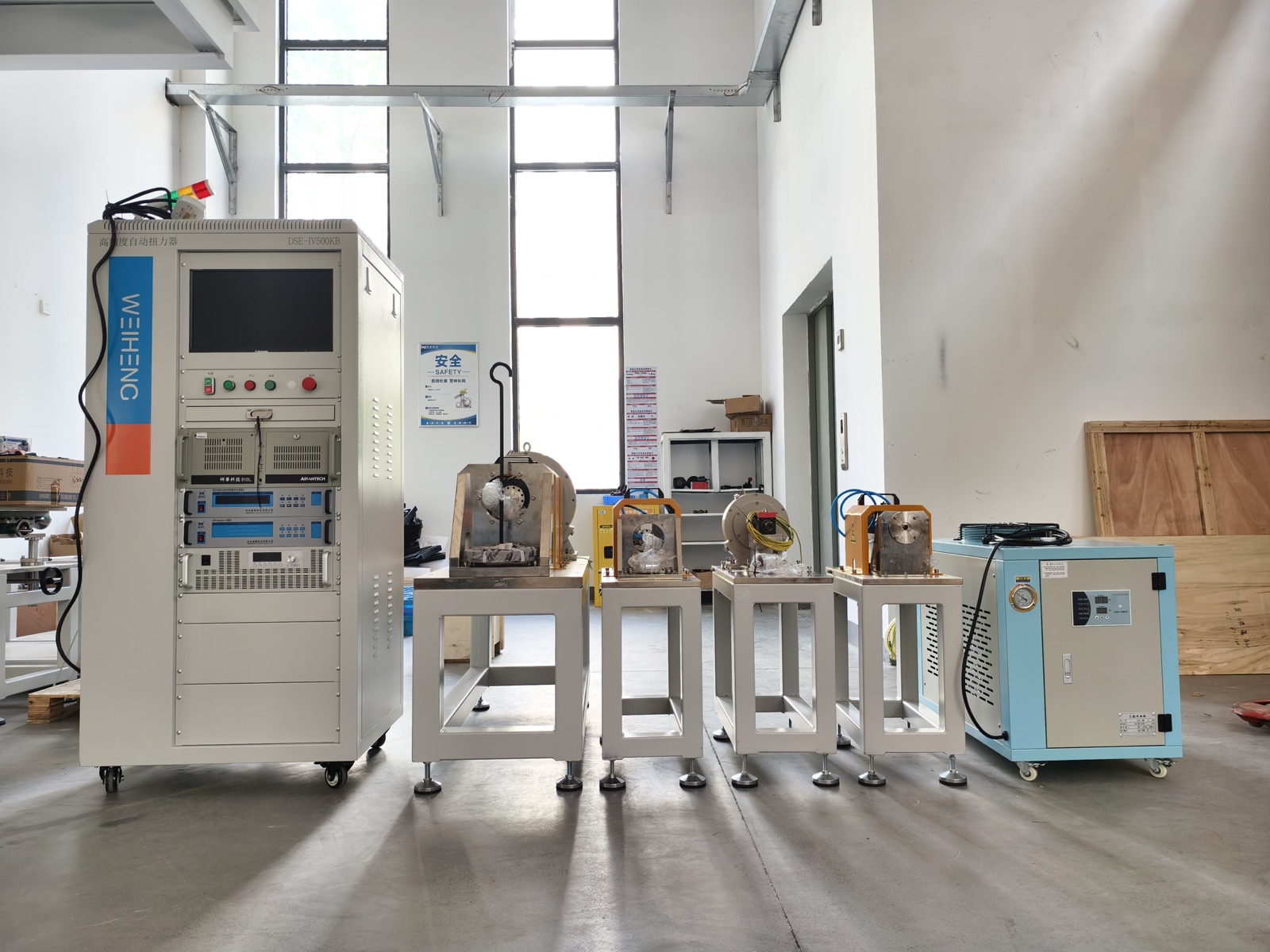
Weiheng integrates the loading units, fixtures, measurement instruments, control cabinet, safety functions, and test software as a complete system.
Motor Coverage
FAQ
Yes. Weiheng designs and manufactures custom motor test benches in China, with in-house development, production, and system integration. Channel calibration, verification, and acceptance evidence must be defined for each project.
Provide the motor type, rated power, rated torque, maximum speed, test items, and laboratory or production requirements. Weiheng engineers will suggest a suitable configuration.
Yes. Fixtures, torque and speed ranges, power range, software workflow, station count, layout, safety protection, and environmental requirements can be customized.
Send motor type, rated power, rated torque, maximum speed, test items, application, target country, drawings or specifications, and whether the system is for R&D, QC, EOL, or laboratory use.
Yes. The software can provide an English interface, automated test sequences, curve display, data recording, reports, and custom workflows.
Remote guidance, video training, English documentation, and project-based on-site work can be discussed. Availability, country, site readiness, access controls, schedule, responsibilities, travel, warranty, spare parts, response handling, exclusions, and whether SAT is required must be agreed in the project contract.
Request a Proposal
Share the motor type, rated power, torque, maximum speed, test items, application, target country, and whether the bench is for R&D, QC, EOL, or laboratory use.