R&D and design comparison
Use configurable operating points, loading, synchronized channels, raw and processed data, and repeatable procedures to compare motor or control variants.
Review motor test bench Request a Quote
 Industrial Motor Testing
Plan the test workflow around the motor, lifecycle decision, operating conditions, required evidence, fixtures, data, and acceptance boundary.
Choose an engineering bench, performance system, quality station, or production EOL route before defining the detailed configuration.
Direct Answer
Industrial motor testing is the planned measurement and functional evaluation of a motor or motor-driven assembly for an engineering, validation, quality, or production decision. The correct workflow follows the motor boundary, lifecycle stage, operating method, required evidence, interfaces, data requirements, and acceptance plan.
Lifecycle Routing
Each route has a different balance of flexibility, repeatability, evidence, operator workflow, and traceability.
Use configurable operating points, loading, synchronized channels, raw and processed data, and repeatable procedures to compare motor or control variants.
Review motor test benchDefine the torque-speed envelope, steady-state points, sweeps, duty cycles, temperatures, loading method, calculations, curves, and review conditions.
Review dynamometer systemFocus on identified samples, stable fixtures, controlled recipes, agreed checks, limits, exception handling, records, and supplier or process comparisons.
Compare testing equipmentUse identified units, repeatable sequences, pass/fail decisions, traceability, operator workflow, reports, and confirmed factory-system handoff.
Review EOL systemProject Definition
A reviewable plan connects every test condition, subsystem, record, and acceptance output to the decision being made.
| Motor and variant | Motor type, rated and peak data, drawings, shaft and mounting, controller or drive, cooling, accessories, supported variants, and tested assembly boundary. |
|---|---|
| Lifecycle decision | Engineering comparison, design verification, incoming inspection, process control, endurance, fault investigation, production release, or another stated quality decision. |
| Operating method | Steady-state points, sweeps, ramps, starts, stops, reversals, duty cycles, load profiles, environmental conditions, and repetition rules. |
| Required evidence | Electrical and mechanical values, curves, maps, temperatures, vibration or noise channels, functional state, endurance records, pass/fail results, and reports. |
| Fixture and interfaces | Coupling, alignment, support, guards, connectors, utilities, cooling, handling, operator access, floor space, and buyer-supplied items. |
| Data and traceability | Recipes, permissions, identification, raw and processed records, calculation boundaries, limits, exceptions, reports, database, and factory interfaces. |
| Review and acceptance | Test article, conditions, sequence, outputs, supplied items, exclusions, review method, documentation, and site-dependent work. |
Selection Signals
Test conditions change often, engineers need access to raw data and procedures, or design and control variants must be compared under documented loading.
The central output is a performance curve, map, operating envelope, dynamic response, thermal behavior, or another synchronized measurement result.
The workflow uses controlled samples or units, stable fixtures and recipes, agreed checks, traceable records, and clear exception handling.
Every unit follows a repeatable production sequence with identification, limits, pass/fail results, records, operator handling, and factory handoff.
Planning Resources
Use R&D Test Bench vs EOL Test System to separate engineering and production needs, then prepare parameters with the Motor Test Bench RFQ Checklist.
For equipment-level configuration, compare Motor Testing Equipment and the Custom Configuration Guide.
FAQ
Industrial motor testing is the planned measurement and functional evaluation of a motor or motor-driven assembly for an engineering, validation, quality, or production decision. The test system and evidence depend on the motor boundary, lifecycle stage, operating method, required outputs, interfaces, and acceptance plan.
An R&D bench prioritizes configurable conditions, engineering measurements, raw data, and procedure flexibility. An EOL station prioritizes repeatable fixtures and sequences, pass/fail logic, identification, traceability, operator workflow, and production handoff.
Projects may require torque, speed, power, current, voltage, efficiency, temperature, vibration, noise, start-stop behavior, direction, dynamic response, endurance, functional status, or project-specific checks. The final matrix must follow the motor and the decision being made.
A shared platform may be possible, but engineering flexibility and production repeatability create different fixture, workflow, permission, timing, data, safety, and acceptance requirements. Define both use cases before selecting one shared system.
Provide motor and assembly data, drawings, lifecycle stage, operating points and sequences, required measurements and reports, fixture and site interfaces, data and traceability needs, target country, and the planned review or acceptance method.
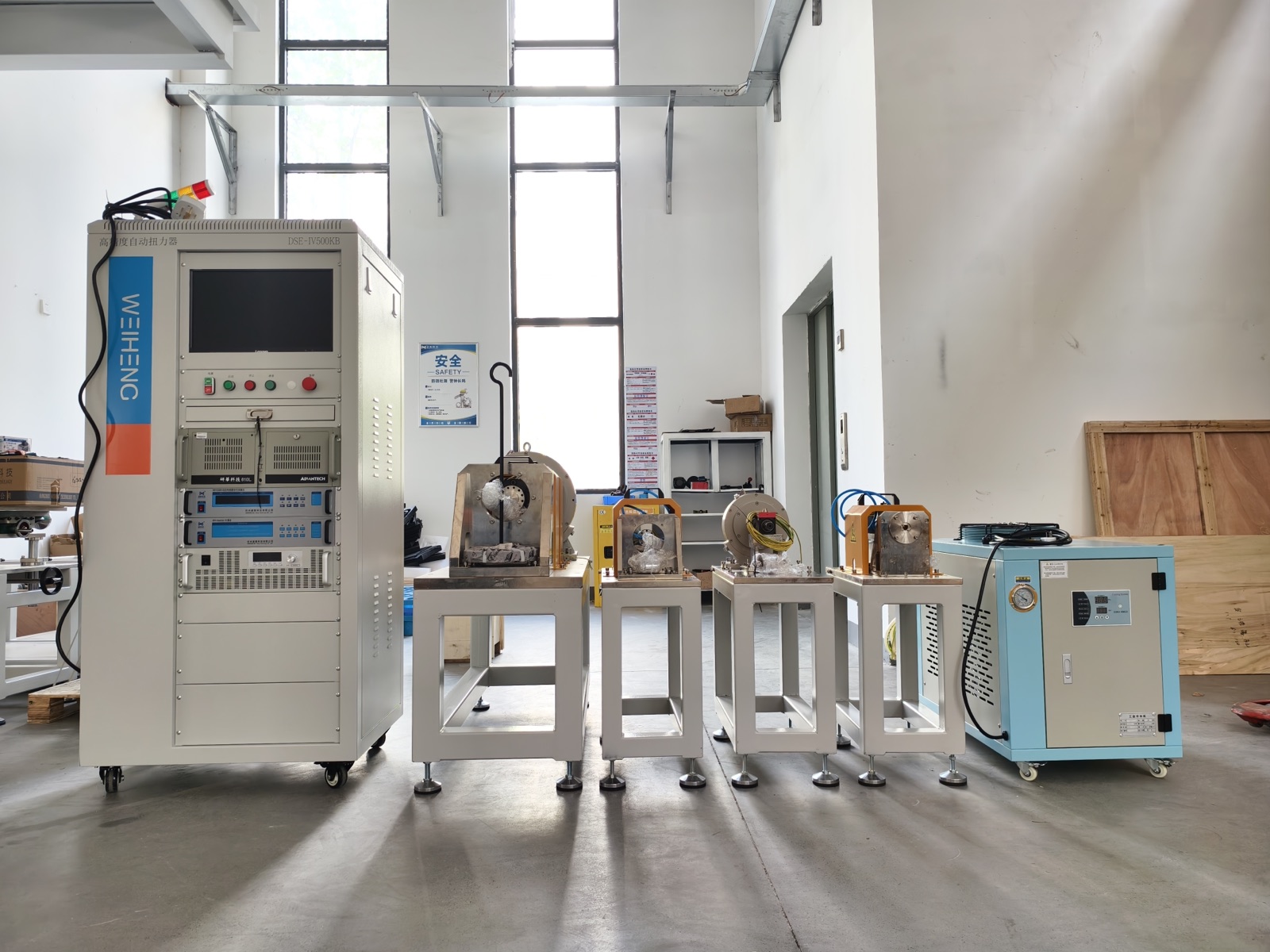
No. A photograph can confirm visible equipment, fixtures, control cabinets, loading hardware, and cooling integration. Measurement range, accuracy, repeatability, cycle time, standards, and acceptance require project-specific specifications and evidence.
Request a Proposal
Share the motor or assembly, drawings, rated and peak values, lifecycle stage, operating points, required measurements and reports, fixture and site interfaces, target country, and acceptance method.