Robot Joint Module Manufacturers
Validate integrated joint modules before delivery, including motor, reducer, driver, encoder, and mechanical interface performance.
 Request a Quote
 Robot Joint Module and Actuator Testing
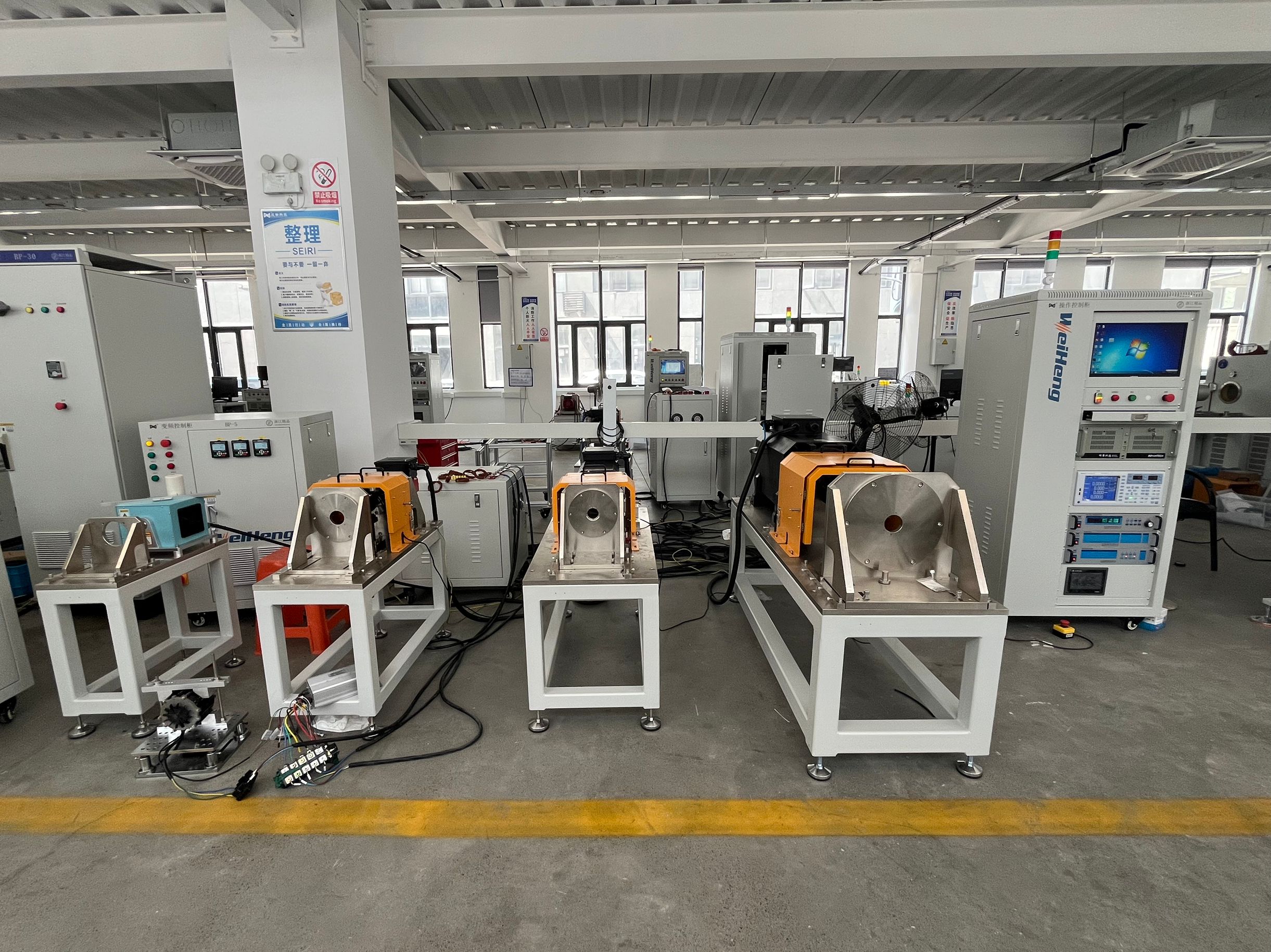
Weiheng designs custom robot joint module motor test systems for integrated motor, reducer, driver, encoder, torque, speed, efficiency, and durability validation.
The loading method, fixture, output interface, measurement channels, driver interface, safety logic, and software workflow are configured around your joint module.
Direct Answer
A robot joint module motor test system validates an integrated robotics actuator or joint module, including motor output, reducer behavior, driver interaction, encoder-related signals, torque, speed, efficiency, dynamic response, and durability. Weiheng configures the system according to module structure, output parameters, fixture, software workflow, and R&D or QC needs.
Application Fit
Validate integrated joint modules before delivery, including motor, reducer, driver, encoder, and mechanical interface performance.
Build repeatable test platforms for torque, speed, positioning-related performance, endurance, and quality consistency.
Support actuator and joint module R&D where compact structure, dynamic behavior, and durability are critical.
Measure reducer-related performance together with motor and control behavior under controlled loading conditions.
Create custom research platforms for joint module performance, control strategy, and endurance validation.
Test Coverage
Final test items depend on the module structure, reducer, driver interface, output parameters, and validation method.
System Architecture
Selected according to joint output torque, speed, duty cycle, dynamic behavior, and endurance requirement.
Measurement channels can support output performance, repeatability, and positioning-related analysis.
Voltage, current, power, driver signals, communication needs, and custom control workflow can be discussed.
Custom fixture, coupling, output interface, base, guard, alignment, and module mounting structure.
Closed-loop loading, emergency stop, overload protection, interlocks, status control, and project-specific safety logic.
Automatic test sequences, curve display, data storage, report output, pass/fail logic, and English workflow customization.
Engineering Inputs
| Module type | Robot joint module, actuator, servo joint, motor-reducer-driver assembly, or reducer-related test object |
|---|---|
| Output parameters | Rated torque, peak torque, rated speed, maximum speed, duty cycle, and endurance requirement |
| Integrated components | Motor, reducer, driver, encoder, brake, sensor, cooling or project-specific module structure |
| Mechanical interface | Output flange, shaft, fixture drawing, installation direction, coupling, guard, and alignment method |
| Measurement channels | Torque, speed, current, voltage, power, temperature, position-related signals, vibration, and custom data |
| Software workflow | R&D sequence, production QC, endurance cycle, automatic report, traceability, and custom judgment logic |
Engineering Value
Weiheng can align loading, fixture design, measurement, driver interaction, safety, and report output for robot joint module validation.
The system can test the joint module as a combined motor, reducer, driver, encoder, and mechanical structure.
Torque, speed, reducer behavior, positioning-related signals, stiffness-related validation, and durability can be considered together.
Mechanical design can follow compact actuator structures, output flanges, mounting direction, and safety access.
The platform can be configured for laboratory validation, endurance testing, or production quality checks.
Configuration Resource
The best starting point is the complete joint module, output load profile, mechanical interface, driver signals, and required engineering decision.
Use a structured checklist for actuator, reducer, encoder, fixture, safety, workflow, and report inputs.
Open the configuration guideUse the servo-specific route when the device under test is the motor and drive rather than the complete motor-reducer-encoder joint module.
Review the servo motor test systemReview the controlled loading and synchronized measurement concepts behind output-side performance evaluation.
Open the testing guideFAQ
A robot joint module motor test system validates an integrated robotics actuator or joint module, including motor output, reducer behavior, driver interaction, encoder-related signals, torque, speed, efficiency, dynamic response, and durability.
Yes. Weiheng can discuss complete module testing around motor, reducer, driver, encoder, fixture, output interface, and software workflow.
The system can be configured to evaluate reducer-related performance together with torque, speed, efficiency, backlash-related checks, stiffness-related validation, and durability, subject to the required method and fixture.
Send the module drawing, output torque, speed range, duty cycle, integrated components, driver interface, test items, fixture requirements, application, target country, and report needs.
Yes. The platform can be adapted for robotics supply-chain validation where compact joint modules, actuators, reducers, dynamic behavior, and durability need repeatable test data.
Yes. Weiheng can discuss English software, automatic sequences, curve display, data storage, pass/fail rules, traceability, and custom reports.
Request a Proposal
Share the joint module drawing, output torque, speed range, duty cycle, integrated components, driver interface, test items, fixture requirements, application, target country, and report needs.