Complete motor test bench
Choose this route when the project needs loading, synchronized electrical and mechanical measurement, fixtures, controls, software, and reports as one system.
Review this system Request a Quote
 Custom Motor Test Systems
Weiheng configures motor testing equipment around the motor or assembly, operating envelope, required evidence, loading method, fixture, software, data workflow, and acceptance boundary.
Compare the correct equipment route before selecting instruments or requesting a quotation.
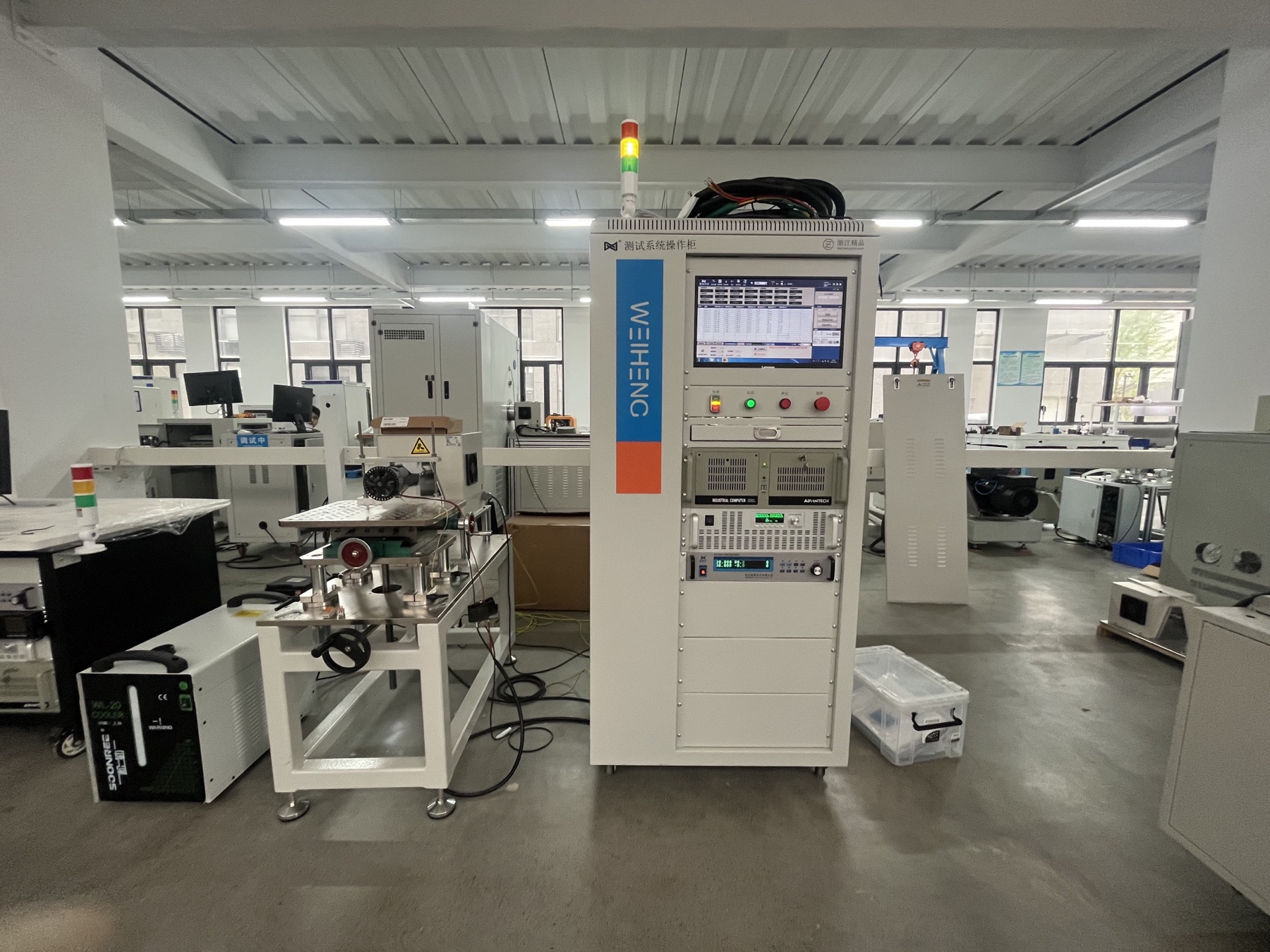
Equipment Selection
Motor testing equipment is the combination of loading, measurement, fixtures, controls, safety, software, and data functions used to answer a defined engineering or quality question about a motor or motor-driven assembly. The correct system depends on the DUT boundary, operating envelope, required test evidence, workflow, site interfaces, and acceptance method—not on a universal equipment list.
Choose the Right Route
Use one primary route, then configure its loading, measurement, fixtures, software, and records around the project.
Choose this route when the project needs loading, synchronized electrical and mechanical measurement, fixtures, controls, software, and reports as one system.
Review this systemChoose this route when controlled torque or speed loading, torque-speed envelope, dynamic conditions, or loading-unit selection is the central engineering problem.
Review this systemUse a dedicated EV, servo, robot-joint, pump, or component-motor route when the DUT, controller, fixture, operating sequence, and evidence differ from a general motor bench.
Review this systemChoose this route for identified units, automatic sequences, pass/fail decisions, defect routing, traceability, and confirmed production handoff.
Review this systemProject Definition
A useful proposal connects every major component to a confirmed requirement or a clearly marked open question.
| Motor and DUT boundary | Motor type, variant, drawings, shaft and mounting, controller or inverter, harness, cooling, accessories, and what is included in the tested assembly. |
|---|---|
| Operating envelope | Rated and peak torque, power and speed, direction, duty cycle, steady-state points, sweeps, ramps, starts, stops, and transient conditions. |
| Required evidence | Curves, maps, electrical and mechanical values, temperatures, endurance records, functional status, pass/fail decisions, or project-specific reports. |
| Loading and measurement | Required loading mode, torque and speed measurement, electrical channels, temperature or custom signals, timing, synchronization, and calculation boundary. |
| Fixture and site interface | Coupling, alignment, support, guards, connectors, utilities, cooling, floor space, handling, operator access, and site constraints. |
| Software and data | Test sequence, recipes, limits, user permissions, live display, calculations, raw and processed records, reports, database or factory interfaces. |
| Acceptance and delivery | Test article, agreed sequence, conditions, outputs, supplied items, review method, exceptions, documentation, and site-dependent work. |
Application Fit
Prioritize configurable operating points, raw and processed data, repeatable procedures, comparison of design variants, and engineering access to the test workflow.
Prioritize the torque-speed envelope, loading method, synchronized channels, stabilization and sweep rules, calculation boundaries, and reviewable curves or maps.
Prioritize repeatable fixtures, controlled recipes, operator workflow, limits, exception handling, traceability, reports, and production-system acknowledgement.
Prioritize flexible interfaces, documented signal paths, configurable sequences, data access, safety boundaries, and the ability to review the experimental method.
Proposal Review
The proposal should make its engineering logic and remaining assumptions visible before hardware is finalized.
Planning Resources
Normalize system scope, response status, evidence, assumptions, exclusions, and verification stages before comparing supplier proposals.
Compare equipment proposalsDefine steering, seat, pump, compressor, actuator, and other component-motor boundaries from engineering validation to production EOL.
Review automotive workflowRoute R&D, performance validation, incoming or process quality, and production release needs to the correct test workflow.
Review industrial workflowDefine the pump, motor or controller, working liquid, circuit, operating points, interfaces, safety, software, and reporting boundary.
Review pump test systemCompare motor parameters, required evidence, loading, measurement, fixtures, software, and acceptance inputs.
Open selection guideTranslate the motor envelope and test workflow into loading, sensors, mechanics, controls, software, and reports.
Open configuration guidePrepare drawings, operating conditions, test items, data, site, delivery, and acceptance information.
Open RFQ checklistUnderstand the difference between a loading unit and the complete equipment system around it.
Compare the equipmentFAQ
Start with the decision you need to make. R&D and characterization usually require configurable loading and synchronized measurement, while production EOL testing emphasizes fixtures, recipes, pass/fail logic, traceability, and handoff. The motor envelope, test evidence, workflow, and acceptance method determine the equipment route.
No. A dynamometer is a loading and measurement unit within many motor test systems. A complete system may also include fixtures, electrical measurement, controls, safety, cooling, software, reports, and factory interfaces.
The structure, loading method, fixtures, channels, software, and test sequence can be configured around the motor or assembly. The proposal must define each supported variant and its interface rather than assume one fixture or range fits every DUT.
Provide the motor or assembly type, drawings, rated and peak operating envelope, test points or sequence, required measurements and reports, fixture and site interfaces, application stage, target country, and the planned acceptance method.
A shared platform may be possible, but R&D flexibility and production repeatability create different workflow, fixture, permission, cycle, data, and acceptance requirements. Define both use cases before deciding whether one system or separate stations are appropriate.
No. A photograph can show physical equipment and integration. Measurement capability, accuracy, repeatability, cycle time, traceability, and acceptance require project-specific methods, records, and agreed evidence.
Request a Proposal
Share the DUT, operating envelope, required evidence, loading profile, fixtures, software and data needs, site interfaces, target country, and acceptance method.