Motor-only characterization
Use a controlled loading unit and synchronized electrical and mechanical measurement to review torque-speed behavior, efficiency, thermal conditions, and operating limits around the motor.
 Request a Quote
 EV Motor and Electric Drive Validation
Weiheng designs custom EV motor testing systems for torque-speed curves, efficiency maps, thermal validation, durability cycles, and electric drive R&D.
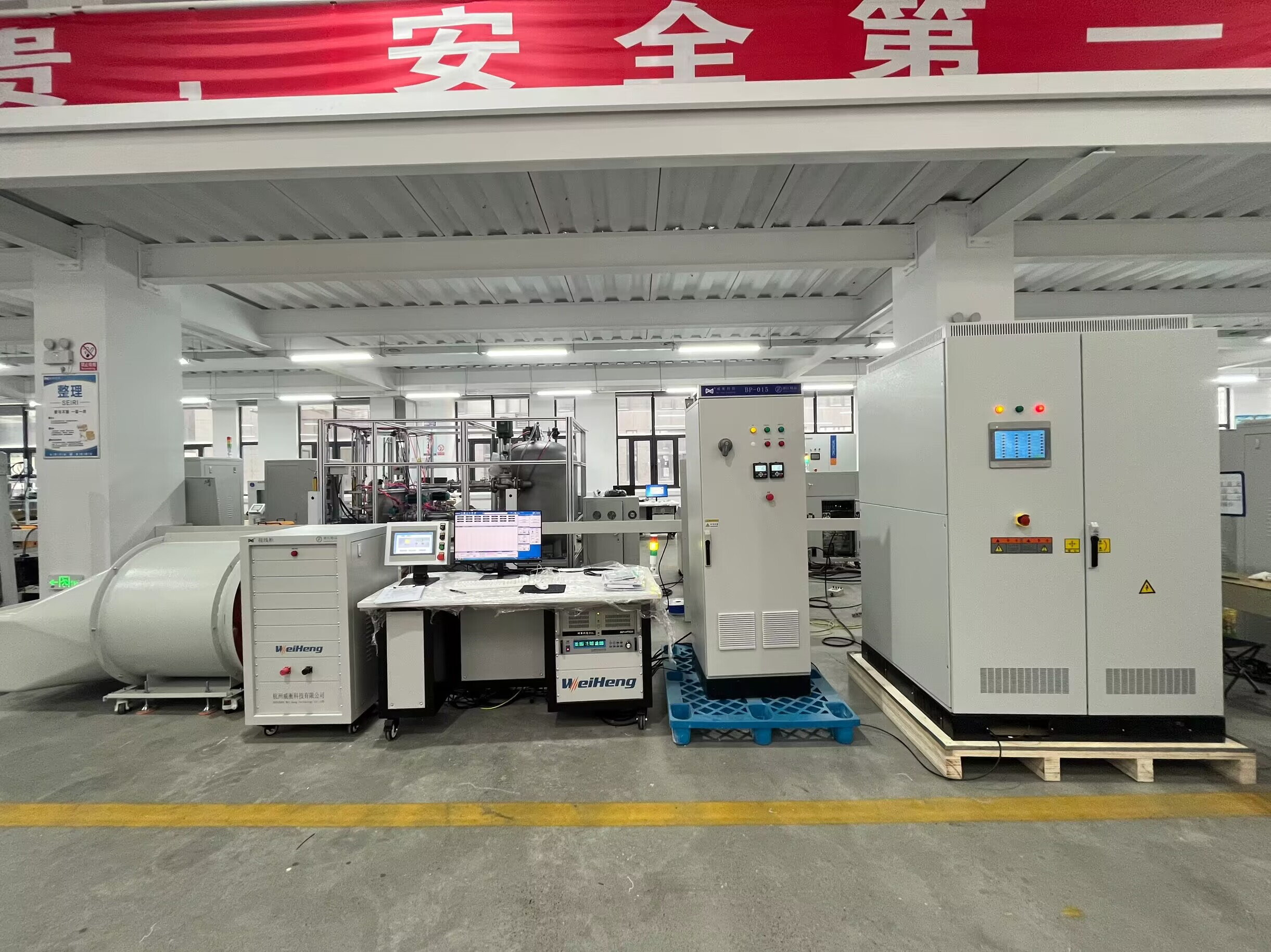
The dynamometer, electrical measurement, controller interface, cooling, fixture, software, and safety logic are configured around your EV motor.
Direct Answer
An EV motor test system measures electric vehicle drive motor performance under controlled loading conditions, including torque-speed curves, efficiency maps, peak output, temperature rise, durability, and controller-related behavior. Weiheng configures the platform according to motor data, voltage platform, cooling, fixture, software workflow, and laboratory or production needs.
Powertrain Test Scope
An EV powertrain test system should state whether the project covers a motor alone, a motor with its controller, or an electric drive assembly. That boundary determines the interfaces, loading method, measured channels, safety logic, software sequence, and acceptance evidence.
Use a controlled loading unit and synchronized electrical and mechanical measurement to review torque-speed behavior, efficiency, thermal conditions, and operating limits around the motor.
Add the inverter or controller interface, command sequence, communication boundary, DC supply condition, cooling loop, protection logic, and controller-related data required by the test plan.
Define the supplied drive assembly, mechanical interface, auxiliaries, cooling, loading arrangement, measured channels, safety boundary, and report output before the rig layout is finalized.
Choose an engineering validation sequence for mapping and durability, or a repeatable production sequence with limits, traceability, automatic judgment, and an agreed acceptance method.
Use the EV motor test items guide to define the validation matrix, then prepare confirmed and open inputs with the EV motor test bench RFQ checklist.
Application Fit
Validate traction motors, drive motors, and new motor designs before customer delivery or production release.
Measure torque-speed behavior, efficiency maps, thermal performance, and controller interaction under defined cycles.
Build repeatable validation platforms for EV, e-motorcycle, EPS, compressor, pump, and auxiliary drive applications.
Configure production-oriented checks, traceable data, automatic judgment, and report output around the factory workflow.
Create electric drive research benches for teaching, motor-control development, and third-party validation.
Test Coverage
Test items are confirmed against the motor, controller, voltage platform, cooling method, and validation plan.
System Architecture
Configured for EV motor torque, power, maximum speed, dynamic response, cooling, and duty cycle.
Voltage, current, input power, output power, and efficiency data are synchronized with torque and speed.
Optional controller signal integration, communication workflow, and project-specific operating sequence.
Cooling interfaces, overload protection, emergency stop, interlock logic, guards, and operating status control.
Custom base, coupling, alignment, shaft guard, installation structure, and service access around the drive unit.
Automated test steps, real-time curves, data storage, efficiency-map output, pass/fail logic, and English reports.
Validation Matrix
Use one matrix to align the test article, loading condition, measured channels, and required evidence before a system configuration is finalized.
| Test phase | Inputs to confirm | Reviewable output |
|---|---|---|
| Motor and controller setup | Motor data, voltage platform, controller interface, harness, cooling method, fixture, coupling, and protection boundary | A defined test article and safe integration scope |
| Performance mapping | Torque-speed points, electrical and mechanical channels, temperature condition, and required curve or map output | Reviewable torque-speed and efficiency evidence |
| Dynamic and endurance cycles | Command profile, ramp or sweep, duration, duty cycle, direction change, cooling condition, and stop limits | A repeatable test sequence and data record |
| Quality or acceptance review | Test article, test items, pass/fail method, report format, traceability requirement, and factory or site boundary | An agreed review method before delivery or installation |
Engineering Inputs
| EV motor data | Rated power, peak power, rated torque, peak torque, rated speed, maximum speed, and voltage platform |
|---|---|
| Drive setup | Motor only, motor with controller, electric drive assembly, cooling loop, or project-specific integration |
| Test workflow | R&D validation, performance mapping, durability cycle, production QC, EOL, or laboratory research |
| Measurement channels | Torque, speed, voltage, current, power, efficiency, temperature, vibration, and custom signals |
| Mechanical interface | Shaft drawing, flange, installation direction, fixture, coupling, alignment, and safety guard |
| Software output | Efficiency map, torque-speed curve, raw data, automatic report, traceability, and custom report format |
Engineering Evidence
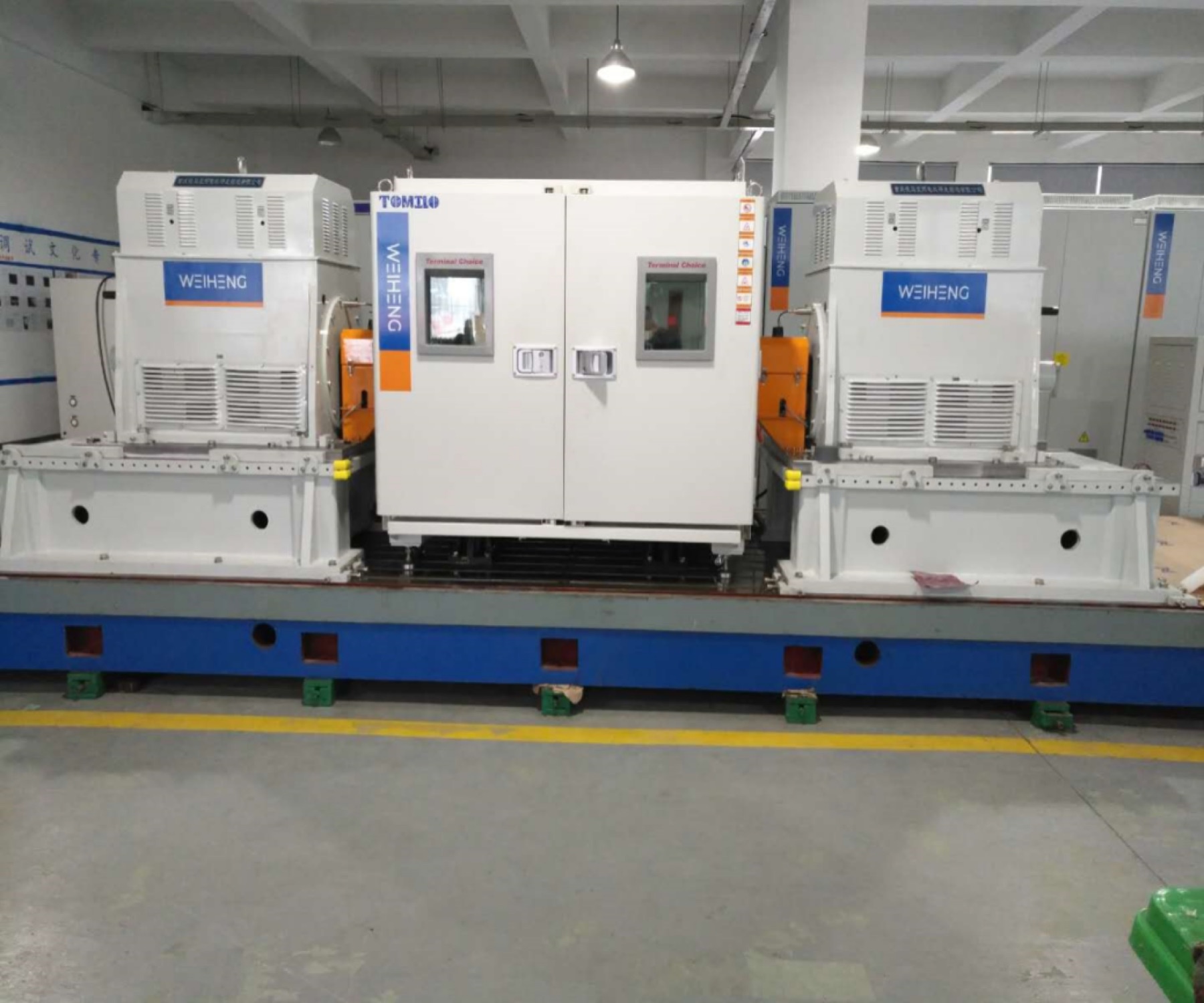
This original Weiheng factory photograph shows an integrated EVP test station on a common base, with two Weiheng-branded side units and a central enclosed section. The photograph verifies the visible physical arrangement only; the DUT, function of each unit, loading arrangement, measurement boundary, performance, and acceptance require project records.
Review the EV motor test items guide before sending a configuration request.
Use the EV motor test bench RFQ checklist to separate confirmed inputs from open points.
Engineering Value
Weiheng aligns mechanical loading, electrical measurement, cooling interfaces, and software output into one EV motor testing workflow.
The system can generate efficiency-map data by synchronizing electrical and mechanical measurements.
Load profiles can be configured around acceleration, speed sweep, torque sweep, and endurance cycles.
Loading, measurement, fixture, cabinet, software, and safety logic are developed as one test platform.
Weiheng can adapt structures, fixtures, workflows, and software outputs for project-specific EV motor testing.
FAQ
An EV motor test system validates electric vehicle drive motors by measuring torque, speed, power, efficiency, temperature, durability, and dynamic behavior under controlled loading conditions.
Yes. Weiheng can discuss motor-only testing, motor plus controller testing, or electric drive assembly integration depending on the project interface and communication requirements.
Yes. The system can collect synchronized torque, speed, voltage, current, and power data to support efficiency-map analysis and report output.
Send the motor specification, voltage platform, rated and peak power, torque, maximum speed, controller interface, cooling method, test items, drawing, application, and target country.
Yes. Weiheng can configure an R&D validation bench, laboratory platform, production quality system, or end-of-line test station around the required workflow.
Yes. English software, automatic test sequences, curve display, efficiency-map output, data storage, report templates, and custom workflows can be discussed for the project.
An EV motor test system may focus on the motor and controlled loading, while an EV powertrain test rig can extend the boundary to the controller, electric drive assembly, cooling, communication, safety, and system-level test sequence. The quoted scope should state exactly which article and interfaces are included.
Request a Proposal
Share the EV motor specification, voltage platform, rated and peak power, torque, maximum speed, controller interface, cooling method, test items, drawing, application, and target country.