
Direct Answer
What is closed-loop torque loading?
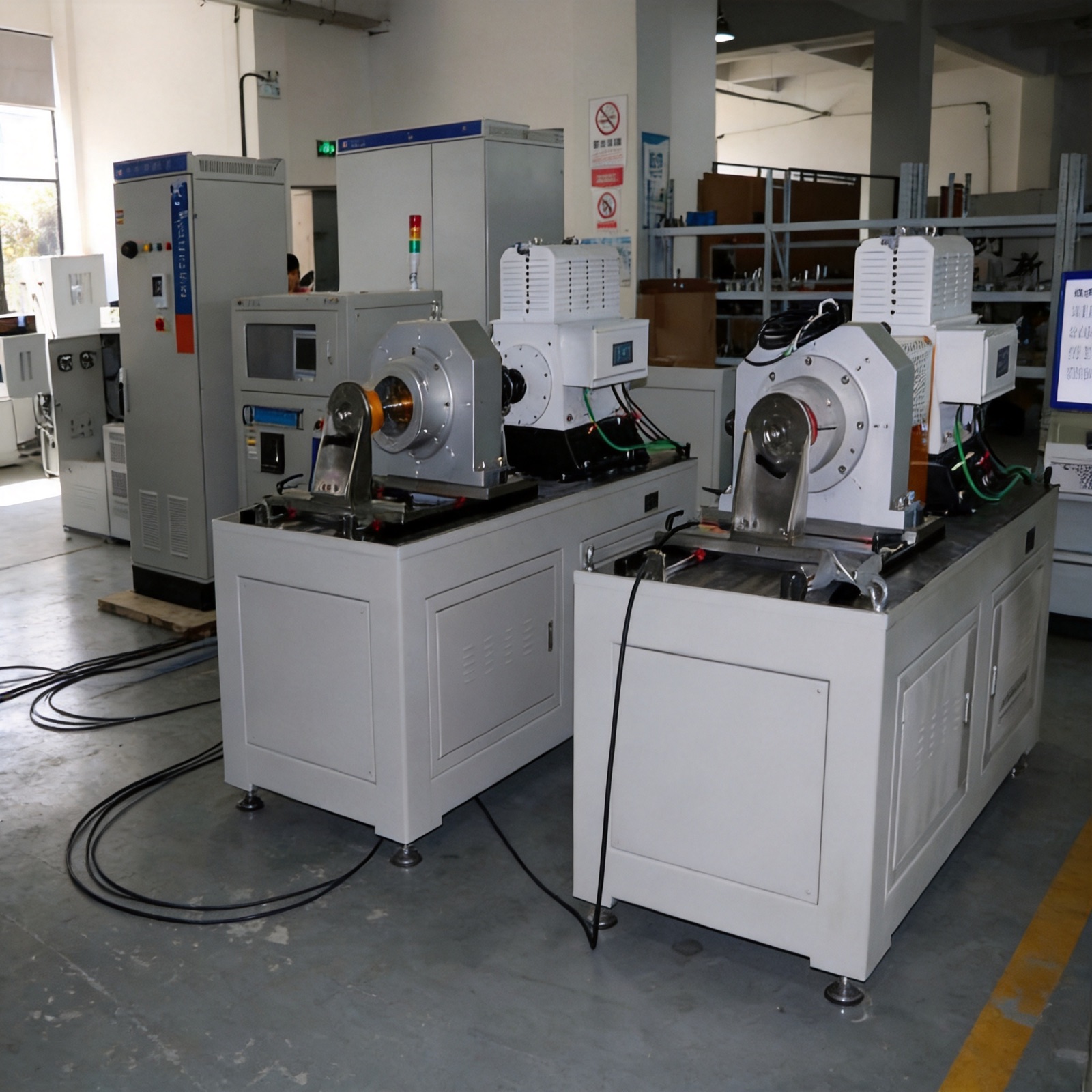
Closed-loop torque loading is a control process in which the motor test bench measures actual torque, compares it with the commanded torque, and adjusts the dynamometer loading action to reduce the difference. The loop runs within defined torque, speed, power, thermal, drive, mechanical, and safety limits.
Control Chain
How the torque-loading loop works.
| 1. Test command | The software or controller defines the required torque, speed, ramp, point, or cycle according to the test sequence. |
|---|---|
| 2. Loading action | The dynamometer and its drive apply controlled load to the motor under test within the configured operating limits. |
| 3. Feedback measurement | Torque, speed, and relevant system signals are measured and returned to the control and acquisition system. |
| 4. Error correction | The controller compares the command with feedback and adjusts the loading action to reduce the difference. |
| 5. Synchronized record | Commanded and measured values, electrical data, temperature, status, alarms, and calculated results are logged against the same sequence. |
Engineering Value
What closed-loop loading contributes to a test bench.
Stable operating points
Feedback control helps the system reach and hold defined load conditions for repeatable measurement and comparison.
Controlled ramps and cycles
Defined transitions can be repeated across motors, revisions, or production samples when the complete system supports the requested dynamics.
Disturbance correction
The controller responds to differences caused by motor behavior, thermal change, or other disturbances within the capability of the bench.
Protection coordination
Torque, speed, power, temperature, vibration, communication, and drive limits can participate in alarms or controlled stops when configured.
Traceable data
Command, feedback, status, and measured channels can be linked to the same test step for curves, reports, and engineering review.
Repeatable acceptance
A defined procedure and agreed tolerance make it possible to evaluate whether loading performance meets the project requirement.
See the dynamometer test bench for the complete system context and the motor torque-speed testing guide for measurement workflow.
Troubleshooting
What should be checked when loading is unstable?
- Coupling, shaft alignment, fixture stiffness, guard clearance, and mechanical looseness
- Torque sensor range, installation, zeroing, calibration status, and signal quality
- Combined inertia, acceleration demand, reversal, and requested ramp rate
- Dynamometer drive limits, control parameters, communication timing, and operating mode
- Mechanical resonance, backlash, flexible elements, or torsional behavior in the driveline
- Cooling, thermal derating, voltage limits, motor-controller protection, and emergency-stop status
Acceptance should use a defined test article and procedure. The command profile, tolerance, stabilization or response criteria, sampling, report method, and test conditions should be agreed before commissioning.
FAQ
Closed-Loop Torque Loading Questions
What is closed-loop torque loading?
It is a control method in which the bench measures actual torque, compares it with a commanded value, and adjusts the dynamometer loading action to reduce the difference while the test sequence is running.
Why is closed-loop loading useful in motor testing?
It supports repeatable operating points, ramps, and cycles, and links the commanded load with measured feedback and synchronized test data.
Is torque control the same as speed control?
No. Torque control regulates loading torque, while speed control regulates rotational speed. A test may assign one side to speed control and the other to torque loading, with transitions defined by the procedure.
Does closed-loop control guarantee any requested transient?
No. Achievable response depends on the dynamometer, drive, sensor, controller, inertia, mechanics, communications, and safety limits. The requested sequence must be checked against the complete system.
How should closed-loop loading be accepted?
Agree on the operating points or sequences, command profile, tolerance, stabilization or response criteria, sampling and report method, test article, and environmental conditions before commissioning.